


How to Day Trade Futures and Perpetuals with $100: Risk Management and Essential Learning

The contents of this article aim solely to inform the reader of a possible trading strategy, and in no way constitute trading advice. Always do your due diligence and excersise proper risk-management.
Day trading futures and perpetual contracts with $100 is possible but extremely risky. Rapidly turning $100 into $1,000 is unrealistic and resembles gambling. Modern platforms allow trading with as little as $5–$10 margin, but even small adverse price moves (e.g., 10% at 10x leverage) can liquidate your account. Beginners should focus on simple price action and volume analysis rather than complex strategies. A $100 account is generally insufficient for professional trading due to limited room for fees and emotional pressure. Prioritize risk management, education, and realistic goals for a sustainable trading journey.
Introduction: Realistic Perspective on Trading Small Capital 
Day trading futures and perpetual contracts with just $100 is technically possible but should be approached with a clear understanding that aiming to turn $100 into $1,000 quickly is an unsustainable and gambling-like endeavor. This article focuses on the critical importance of risk management and continual learning rather than promising fast profits.
Futures and Perpetual Trading Basics: What Beginners Must Understand
Futures trading involves contracts to buy or sell an asset at a future date, using margin to control larger positions with smaller capital. While traditional futures often require significant capital, some platforms now offer micro contracts or crypto perpetuals allowing entry with as little as $5 to $10 USD minimum margin, making trading accessible to small accounts.
Perpetual contracts, common in crypto markets, have no expiration and operate 24/7, often with higher leverage but additional risks like funding fees and rapid liquidations.
For beginners, mastering the concepts of margin, leverage, and inherent risks in both futures and perpetuals is essential. The smaller the capital, such as $100, the more prudent the risk management must be to preserve the account.
Can You Day Trade Futures With $100 and Manage Risk?
Day trading futures with $100 means working within tight margin requirements, and every trade involves significant risk due to leverage and fees.
-
Margin Requirements: Platforms like Binance and Bybit now offer micro futures where the minimum margin can be as low as $5 to $10 USD, facilitating access to futures trading on small accounts.
-
Leverage and Risk: If you trade with, for example, 10x leverage on a $100 account, your total exposure is $1,000. A price move of just 10% against your position would wipe out your entire capital, highlighting how quickly losses can materialize.
Concrete Risk Calculation: Understanding Liquidation Thresholds
Consider trading with $100 and 10x leverage:
-
Total position size: $1,000
-
If the market price moves against you by 10%, your position loses $100, which equals your full account balance.
-
This means a price decline of just 10% from your entry will lead to liquidation, wiping out your account.
Using higher leverage increases this risk further; for example, 20x leverage reduces your liquidation threshold to a mere 5% adverse price movement.
This example underscores the razor-thin margin of error and the necessity of very tight stop-loss strategies and risk discipline.
Simplified Trading Strategy: Using Price Action and Volume Analysis
Instead of complex methods like the "80% rule," beginners should focus on clear price action and volume signals as practical guides:
-
Price Action involves reading candlestick patterns and support/resistance zones to anticipate short-term market movements.
-
Volume Analysis can confirm price moves’ strength, helping decide when to enter or exit trades.
These concepts are easier to grasp and apply, providing a more accessible entry point for traders with limited capital.
Why a $100 Trading Account Is Insufficient for Professional Day Trading
Using $100 as a day trading account is not only psychologically challenging but operationally limiting for anyone serious about making trading a sustainable business or career:
-
Limited Buffer for Costs: Commissions, fees, and slippage quickly eat into tiny capital, leaving minimal room for error.
-
Emotional Pressure: The high risk of rapid loss with small capital leads to emotional decision-making, increasing the chance of costly mistakes.
-
Lack of Diversification: Small accounts force narrow trading strategies, reducing chances to manage risk through portfolio balance.
-
Incompatible with Professional Goals: Serious traders often require larger capital to accommodate market volatility, commissions, and to implement scalable risk management strategies.
Futures Trading vs. Perpetual Trading: Updated Comparison for Small Capital
| Aspect | Futures Trading | Perpetual Trading |
| Contract Expiration | Set expiration date and settlement | No expiration, continuous contract |
| Leverage | Often 10-20x | Often higher, up to 100x+ |
| Minimum Margin | Around $5 to $10 on micro contracts | Similar low minimums on crypto platforms |
| Funding Fees | None, margin interest may apply | Funding rates paid between longs and shorts |
| Market Type | More regulated, traditional assets | Highly volatile, 24/7 crypto markets |
| Best For | Those preferring defined, lower risk | Aggressive traders with high risk tolerance |
Final Thoughts and Warnings: Prioritize Education and Discipline
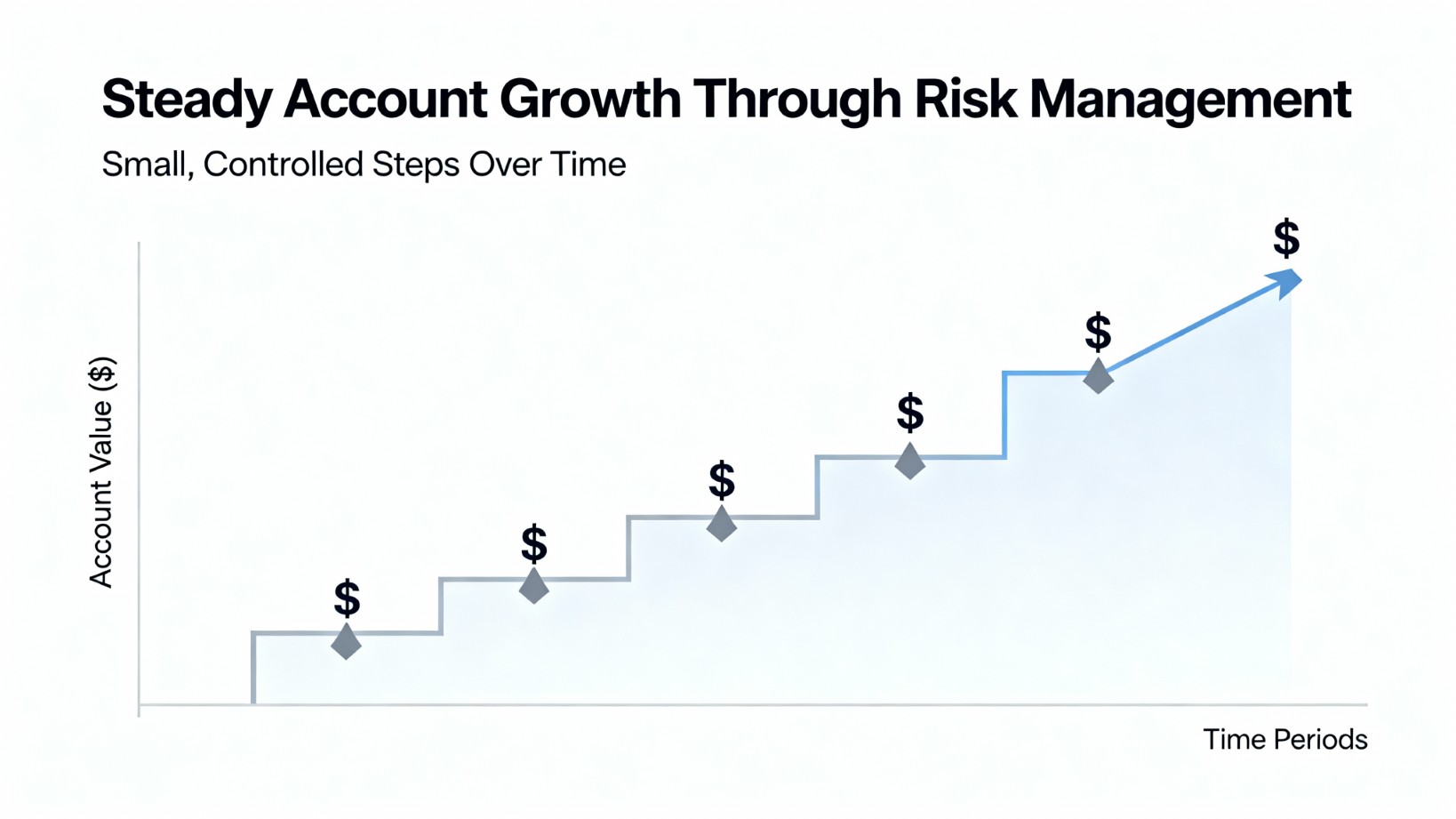
Leveraged day trading, especially with limited capital like $100, is inherently risky and should be treated as a learning journey rather than a quick money scheme. Success depends on:
-
Thorough understanding of market mechanics and margin requirements.
-
Careful risk management and strict discipline with stop-loss orders.
-
Realistic expectations recognizing that rapid growth of trading accounts is rare and often unsustainable.
-
Continuous education and strategy refinement to develop consistent skills.
Conclusion
Day trading futures and perpetual contracts with small capital is feasible but demands unwavering attention to risk management and a commitment to learning. Aiming to turn $100 into $1,000 rapidly is a high-risk gamble, not a replicable strategy. Instead, focus on mastering fundamental price action and volume concepts, understanding margin and leverage, and recognizing the psychological and practical limits of small accounts before considering trading as a professional pursuit. Prioritize your capital preservation to build a sustainable trading foundation over time.