
Trending Coins and Tokens🔥


Crypto
Exchange


TL;DR Smart contract audits reduce code risk, but they do not prove that a team is honest, tokenomics are sustainable, admin control is distributed, or future upgrades are safe. This guide explains seven red flags a typical code audit may miss, shows how post-audit rug pulls exploit scope gaps, and gives a 30-minute process for checking the human, economic, and community risks around the code.
“Audited by Hacken” or “Audited by CertiK” is one of the most powerful marketing lines in crypto. It can also create one of the most dangerous misunderstandings.
The issue is not that audit badges are useless. It is that many investors treat them as full safety guarantees. A smart contract audit is an engineering review of defined code, at a defined point in time, against security and business-logic risks within scope.
An audit does not prove that the founder is honest, that a working product exists, that the token unlock schedule is survivable, that admin keys are independently controlled, or that contracts deployed after the report will remain safe.
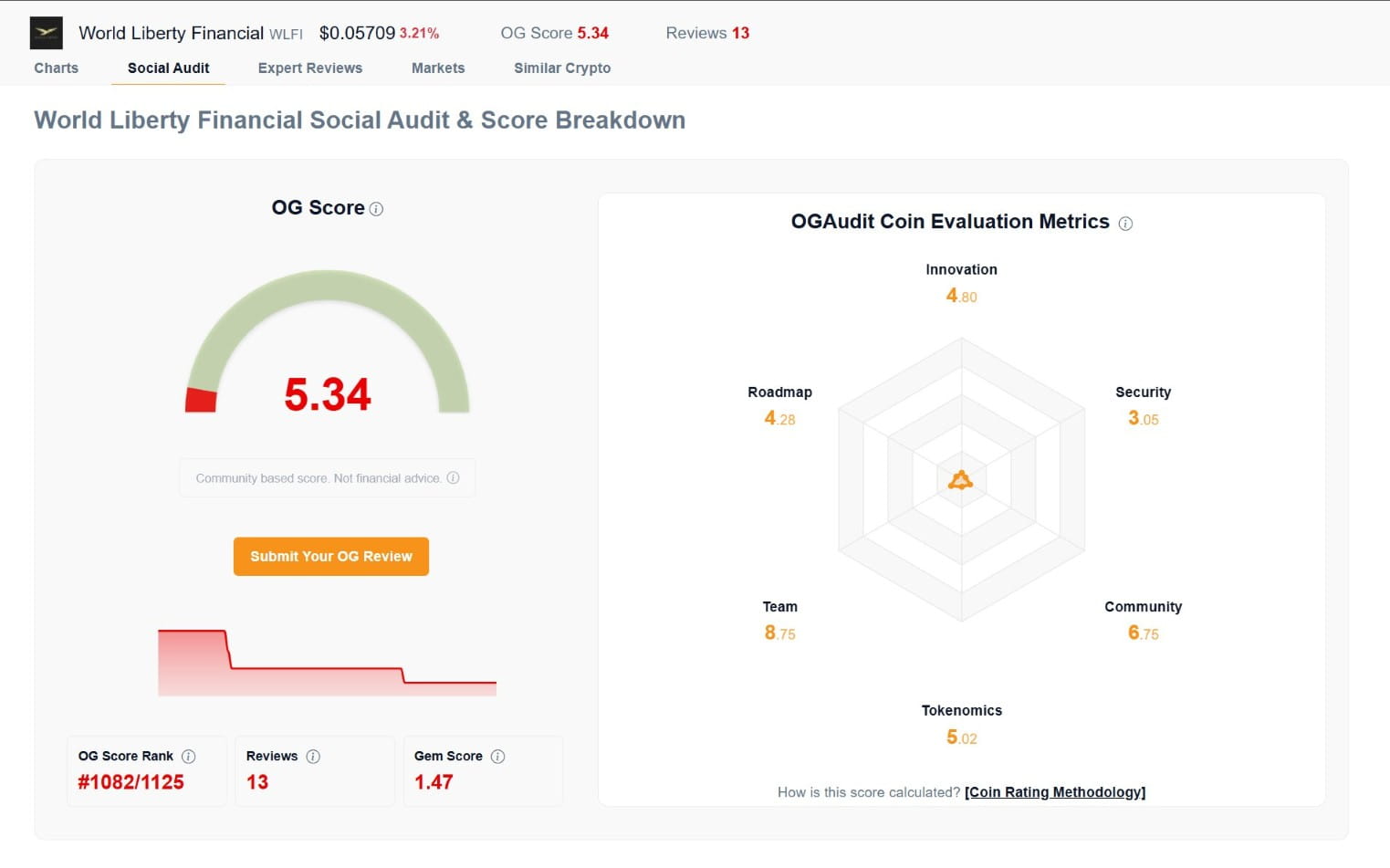
That scope gap is where many crypto scam red flags live. OGAudit’s Crypto Social Audit methodology is designed to review the human, economic, and community layer around the code.
What Smart Contract Audits Actually Verify
A typical smart contract audit examines a defined codebase and scope for vulnerabilities, unsafe assumptions, access-control failures, business-logic flaws, and deviations from the intended design. Hacken’s smart contract audit methodology describes a process combining manual review, automated tools, structured testing, reporting, and quality assurance.
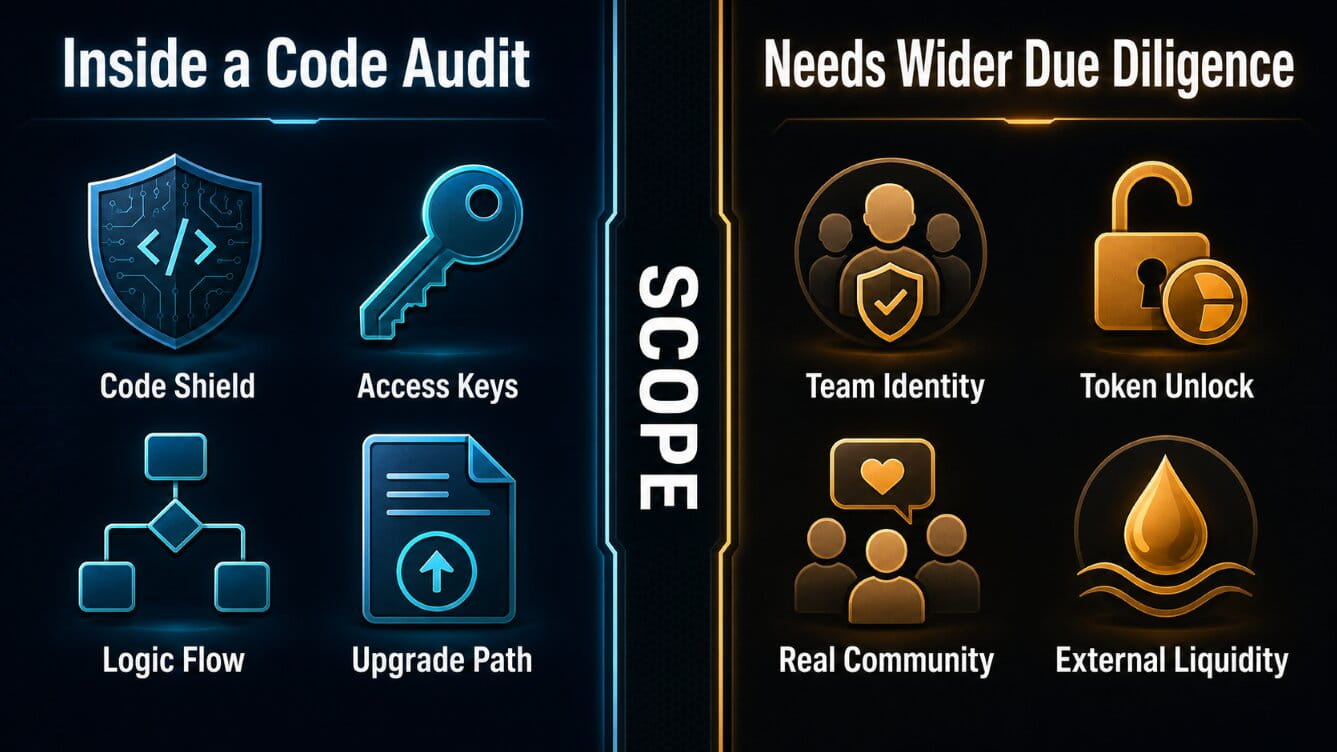
A typical audit may check:
- Reentrancy, unsafe external calls, arithmetic errors, and logic flaws
- Access control, privileged functions, initialization, and upgrade authorization
- Oracle dependencies, gas-related denial-of-service risks, and integration assumptions when included in scope
- Project-specific business logic, invariants, state transitions, and edge cases
A typical code audit does not independently verify:
- Team identity, real-world accountability, or founder intent
- Product-market fit, roadmap credibility, or whether public claims are true
- Who controls multisig signers or admin keys in practice
- Contracts, front ends, bridges, lockers, or upgrades outside the defined scope
- Community authenticity, off-chain liquidity promises, or future deployments
Broader services such as team KYC, tokenomics reviews, penetration testing, or proof-of-reserves assessments may cover additional areas. This article focuses on the limits of a typical smart contract code audit.
Read the Scope Section Before Reading the Score
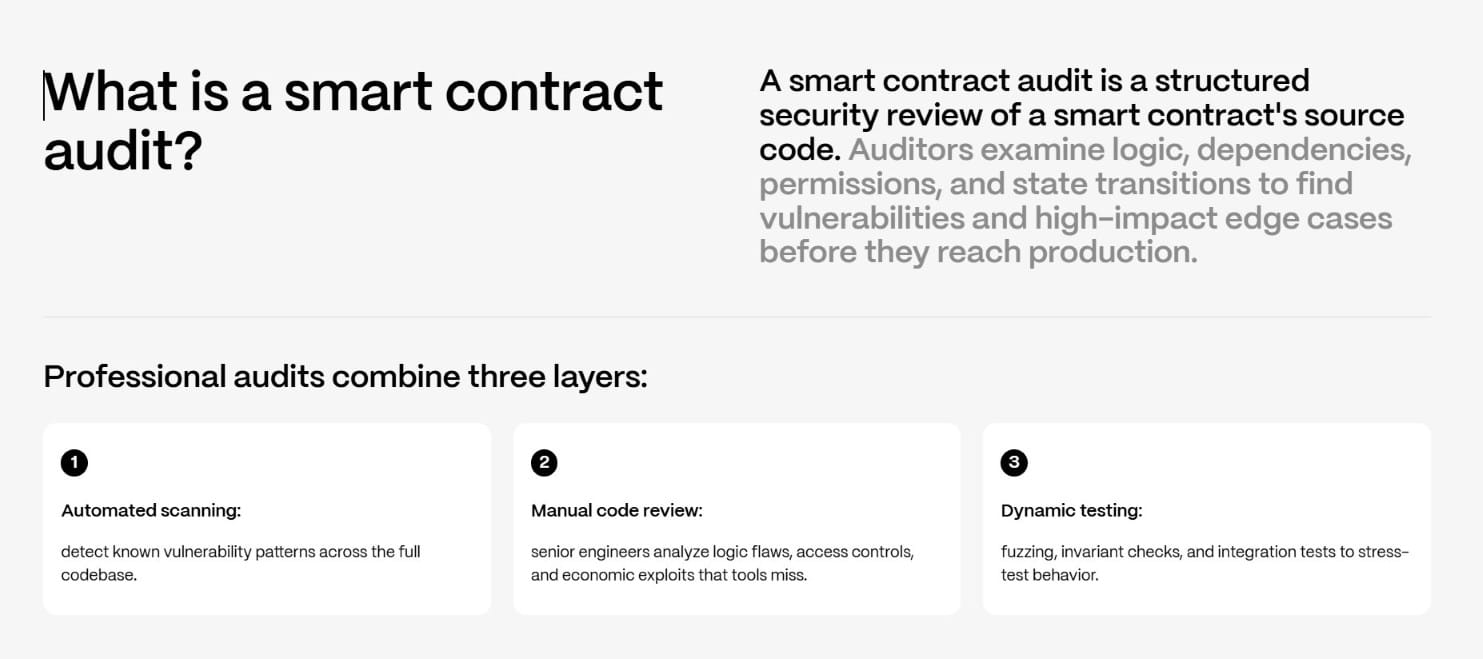
Every serious audit report has a Scope section. It matters more than the logo because it identifies the repositories, contracts, commit hashes, addresses, assumptions, and deployment state reviewed by the auditor.
The contrast between CertiK’s official postmortems for Merlin DEX and Swaprum shows why this distinction matters. CertiK said Merlin’s privileged-role vulnerability was within audit scope, while Swaprum’s later malicious upgrade was outside the reviewed implementation. Both cases are broken down in detail in our Swaprum and Merlin case analysis.
Those findings do not make every audit useless. They show why the first question should not be “Who audited it?” The better question is: “What exactly did the audit cover, and does that match the contract holding user funds?”
Where a Social Audit (Community Review) Fits
A code audit asks whether the in-scope code contains security or business-logic flaws. A Crypto Social Audit asks whether the people, incentives, wallets, community behavior, and operating history around the code create trust or risk. See the full smart contract audit vs social audit comparison for how the two layers divide responsibility.
For a broader breakdown of how crypto audit firms, security ratings, and social audits compare, see our analysis of CertiK Skynet, Hacken, CER.live, and OGAudit.
The social layer matters because many retail losses happen without a classic code exploit. Users trust false team claims, ignore an unlock cliff, miss a reused deployer wallet, deposit into an unaudited contract, or believe a liquidity-lock screenshot without checking the locker.
7 Crypto Red Flags a Typical Code Audit May Miss
These warning signs do not require advanced code skills. They require scope discipline, source checking, and a willingness to look past the homepage badge.
Red Flag 1. Anonymous Team With No Verifiable History

What it looks like: Founders use fresh pseudonyms, the domain was registered recently, LinkedIn profiles appeared around launch, and GitHub activity looks copied or cosmetic.
Why audits may miss it: Code audits review software. They do not normally perform a public background investigation on the humans deploying it. Some firms offer separate KYC services, but a standard code audit is not founder verification.
What catches it: Check prior projects, public commits, domain history, conference appearances, legal entity records, and reputation searches. Pseudonymity is not automatically a problem. A pseudonym with years of visible work is different from a name that appeared last month.
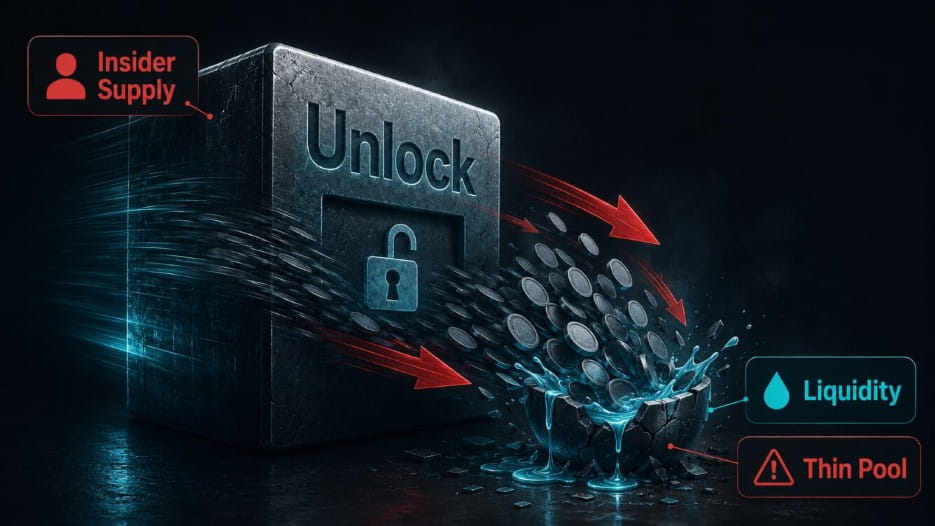
Red Flag 2. Tokenomics That Pass Code Review but Fail Liquidity Math
What it looks like: The token contract works as specified, but team, insider, or venture allocations unlock into thin liquidity.
Why audits may miss it: An audit can verify that a mint function is restricted and a supply cap is enforced. A typical code audit does not model how a large unlock will affect a small pool or whether expected sell pressure can be absorbed.
What catches it: Check holder concentration, team and investor allocations, vesting contracts, the next unlock, and the unlock amount relative to usable liquidity.
Red Flag 3. Centralized Admin Keys Presented as Decentralized Governance
What it looks like: A project advertises a multisig, but most keys are controlled by the same team, entity, or closely related wallets. Upgradeable contracts remain under a small group of insiders.
Why audits may miss it: Auditors can identify powerful roles, but they generally cannot verify who controls each signer in the real world or whether the apparent governance structure is operationally independent.
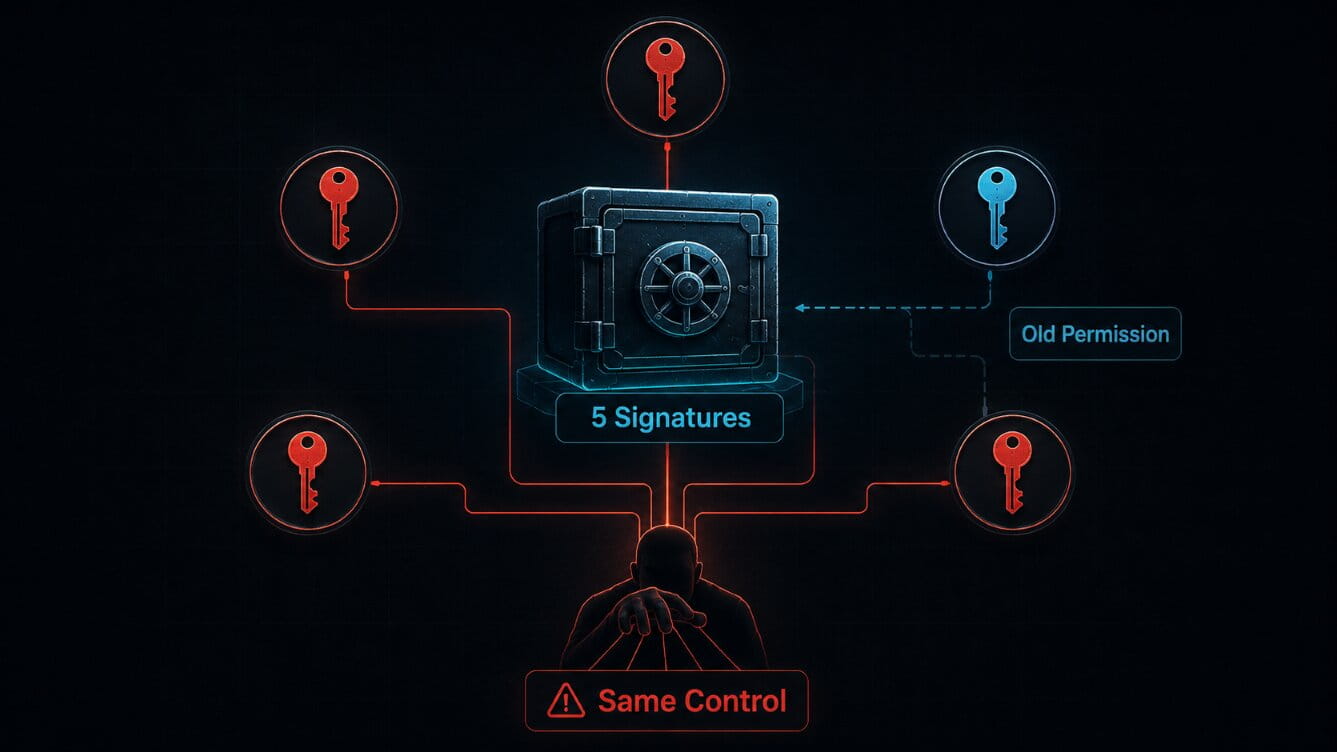
What catches it: Inspect signer wallets, wallet age, activity history, independence, and prior use. A multisig is only as independent as its signers. Halborn’s analysis of the 2022 Ronin bridge attack shows why: five signatures were required, but attackers compromised four Sky Mavis validators and used an unrevoked Axie DAO permission for the fifth. It was not a self-rug, but it demonstrated how concentrated operational control weakens security assumptions.
Red Flag 4. Manufactured Community Engagement and Inorganic Users

What it looks like: A Telegram group has 90,000 members but almost nobody online, an X account has a million followers with almost no meaningful engagement, and Discord replies repeat the same generic praise regardless of the topic. Sybil bots are presented as organic users.
Why audits may miss it: Smart contract auditors do not need to read Telegram to find reentrancy bugs. Community authenticity and botted on-chain or off-chain activity normally sit outside the code-audit scope.
What catches it: Measure engagement quality rather than headcount. Real communities ask specific questions about vesting, product delivery, liquidity, and security. Fake communities repeat slogans or avoid direct answers.
Bot-detection tools can flag suspicious spikes, but they are not conclusive evidence. Treat them as filters for deeper review. Coordinated inauthentic behavior usually requires manual context, cross-platform comparison, and on-chain pattern analysis.
Red Flag 5. Roadmap Promises Nobody Can Enforce
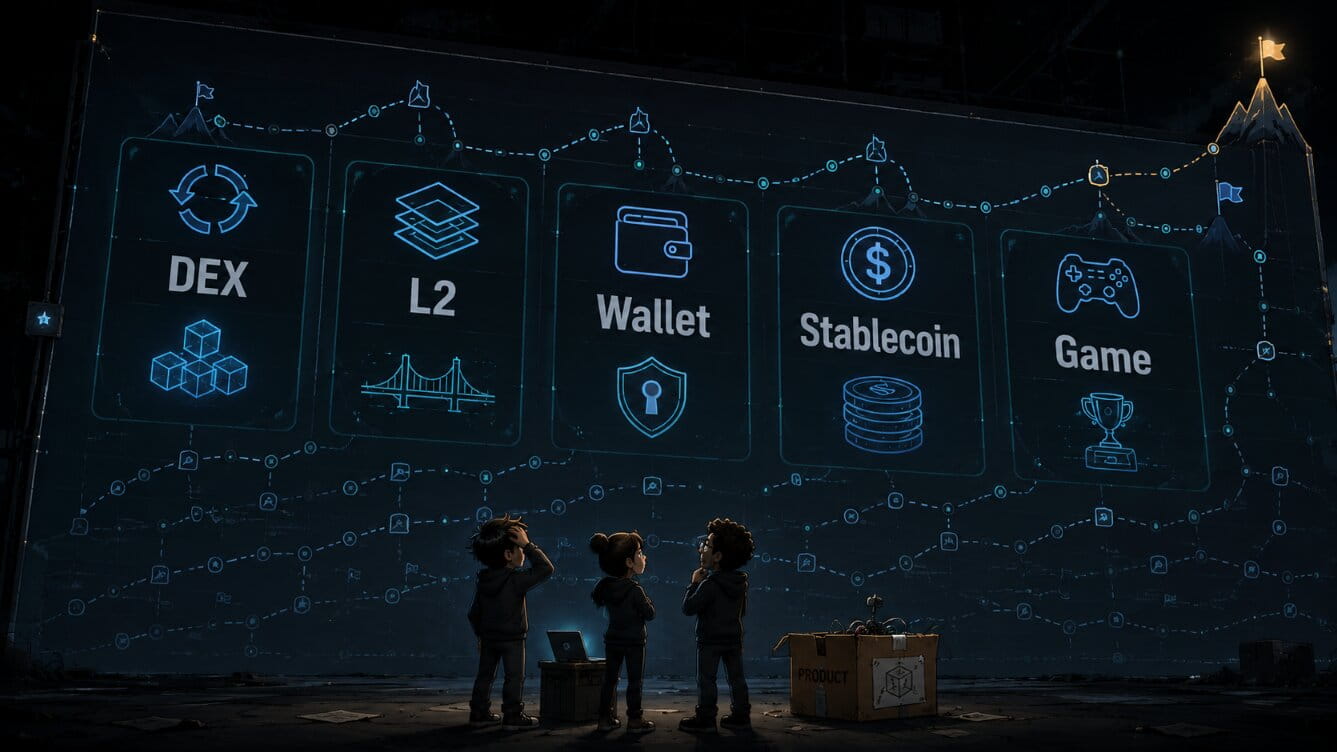
What it looks like: A small team promises a DEX, a Layer 2, a wallet, a stablecoin, and an on-chain game within the same year.
Why audits may miss it: A roadmap is a marketing document. An audit reviews what exists in scope; it does not enforce what the team promises to build later.
What catches it: Compare team size, hiring, commit activity, shipped milestones, and timeline changes. A roadmap that repeatedly moves while public messaging remains overconfident is an execution-risk signal, even when the team is not malicious.
Red Flag 6. Copy-Pasted or AI-Generated Documentation

What it looks like: A whitepaper repeats phrases such as “revolutionary infrastructure” without explaining mechanisms, dependencies, tradeoffs, or failure modes. In some cases, it is little more than AI-generated filler.
Why audits may miss it: Auditors review the submitted code and documentation needed for the engagement. Weak public documentation can coexist with the same audit result if the in-scope code is unchanged.
What catches it: Read one technical section out loud and explain it in plain language. Serious documentation identifies assumptions, dependencies, risks, and what can break.
Red Flag 7. Liquidity-Lock Claims That Expire in the Small Print
What it looks like: The website says liquidity is locked, but the lock covers only part of the pool, expires soon, or depends on a locker or position with permissions the user has not checked.
Why audits may miss it: The liquidity locker is often an external contract. Unless it is included in the audit scope, the project audit does not guarantee that the lock is complete, long enough, or correctly configured.
What catches it: Verify the position through UNCX or Team Finance. Confirm the amount locked, unlock date, owner or withdrawer, and whether the lock or locker has relevant upgrade or migration permissions.
Burning LP tokens can permanently prevent the holder from withdrawing that specific liquidity position, which blocks LP-removal rug pulls through that position. It does not eliminate other risks such as unlimited minting, transfer restrictions, proxy upgrades, alternate pools, oracle manipulation, or treasury dumping.
How Scammers Design Around Audits
Once scammers understand what an audit checks, they also understand what it does not check. Three patterns appear repeatedly in documented post-audit failures.
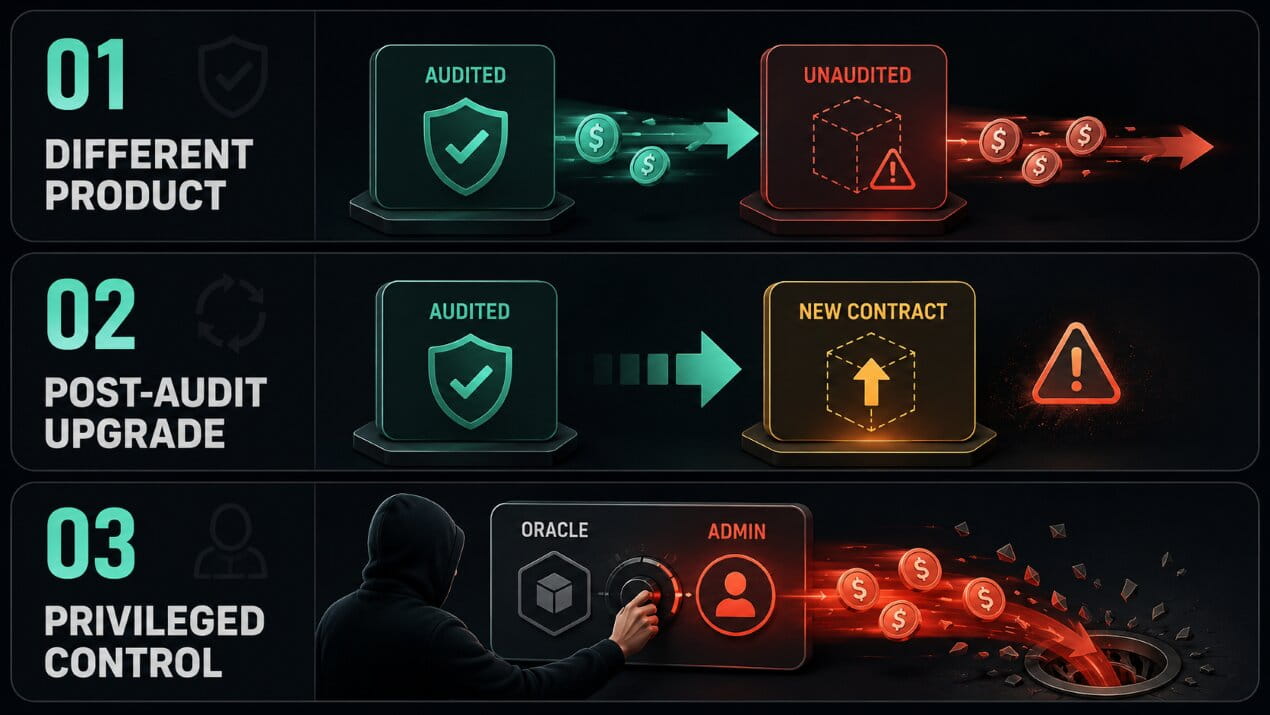
1. Audit the Benign Product, Move Value Through the Unaudited One
Fintoch is a clear example. CertiK’s Fintoch postmortem lists approximately $31.6 million in losses in May 2023 and states that CertiK had audited the pool and lending product, while the affected FTH token product was different and therefore outside audit scope.
The lesson is simple: an audit report can be accurate while a homepage badge still misleads users. Always compare the product and contract you are using with the components explicitly listed in the report.
2. Upgrade the Contract After the Audit
CertiK’s Swaprum incident review says the project owner upgraded the MasterChef-style staking implementation to a malicious version. The new logic moved staked LP tokens, removed liquidity, minted tokens, and drained approximately $3 million. CertiK classified the incident as outside audit scope.
The lesson: an audit of today’s implementation does not guarantee that tomorrow’s implementation will remain unchanged.
3. Use Privileged Controls to Manipulate the Economic Design
Magnate Finance shows another pattern. Cointelegraph reported that the Base lending protocol lost about $6.5 million after its price-oracle provider was changed and assets were removed. The deployer had already been linked by on-chain investigators to the earlier Solfire exit scam.
The contracts can execute as designed while an operator-controlled oracle, admin role, or other economic control point becomes the exit door.
Case Study 1. Fintoch and the Audit-Scope Gap
Fintoch claimed Morgan Stanley backing, used a fake executive identity, and promoted extreme returns. Hacken’s Fintoch investigation reported a promised 1% daily return and identified the supposed executive “Bobby Lambert” as actor Mike Provenzano.
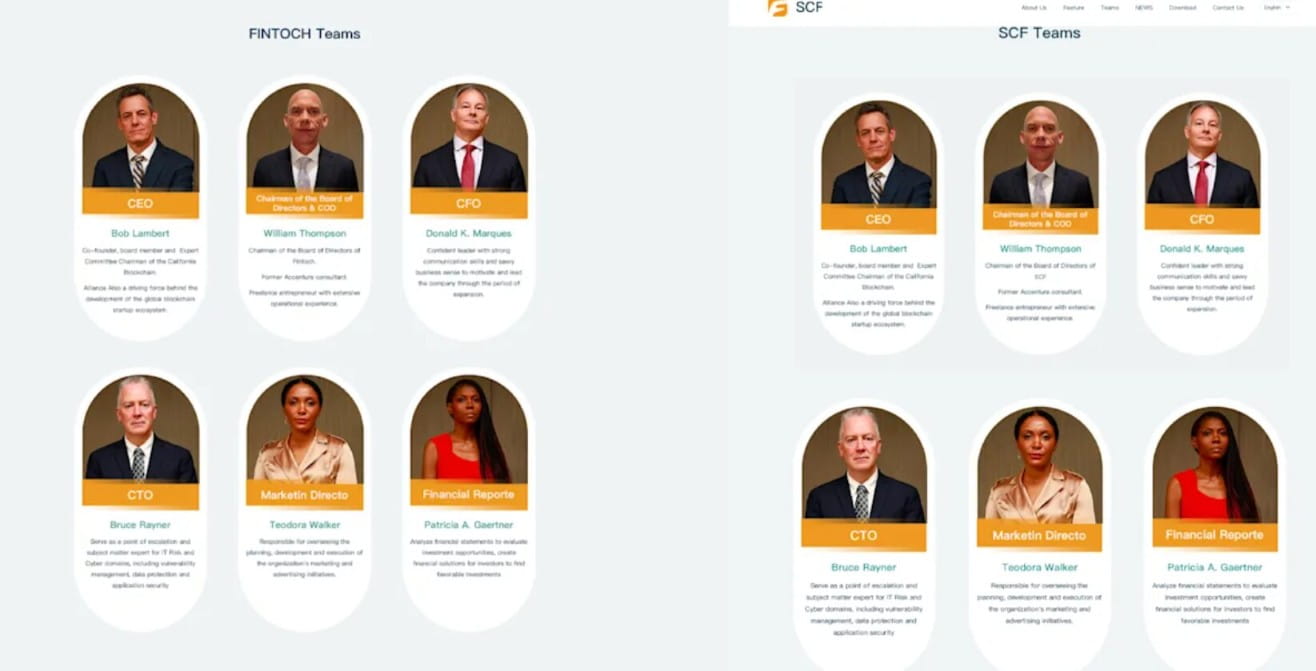
CertiK’s postmortem confirms the key scope issue: the audited product was the pool and lending product, while the affected FTH token product was different and outside scope.
CertiK’s later FinSoul investigation stated that Standard Cross Finance was a rebrand of Fintoch, that actors were again presented as team members, and that the related FSL incident was an exit scam.
Fintoch exposes the full failure chain. The audit was real. The red flags around the people, promises, and contract scope were also real. The badge did not connect those dots for users.
Case Study 2. Solfire, Kokomo, and Magnate
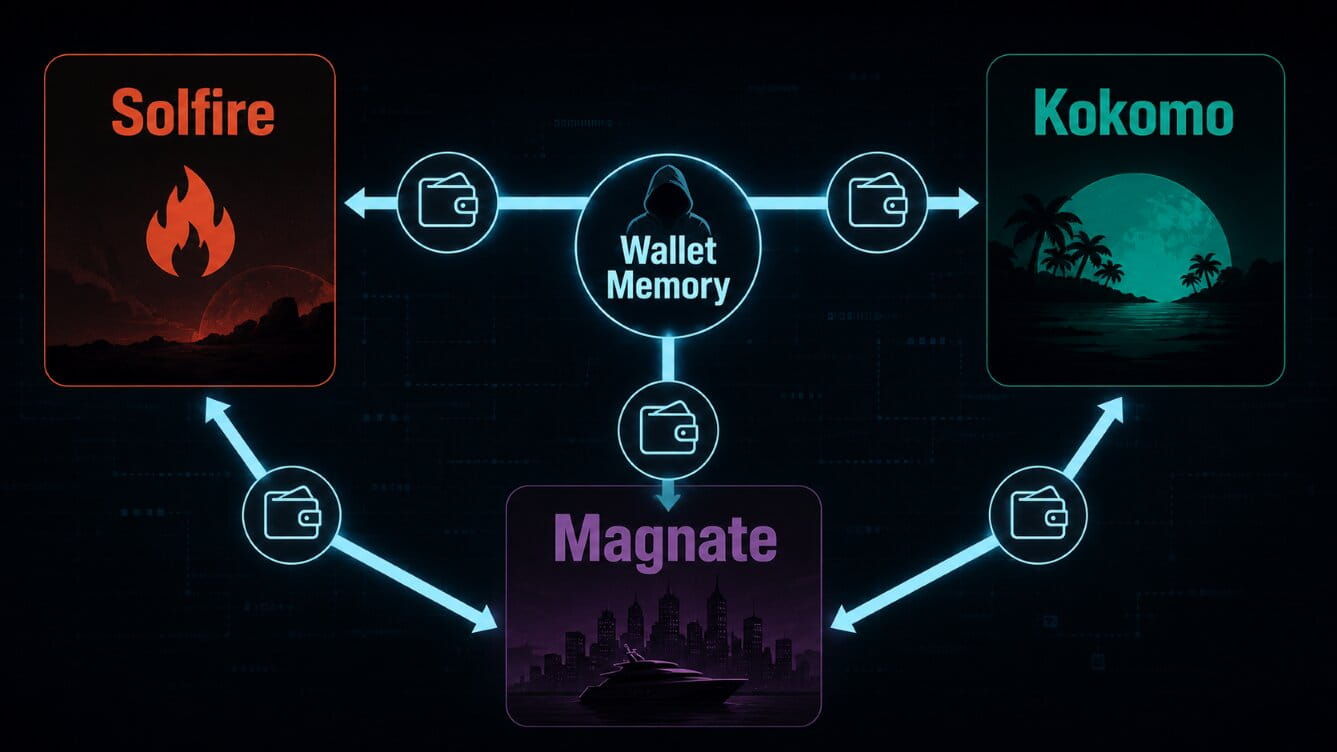
This pattern is about wallet memory. TRM Labs reported that Solfire Finance executed a rug pull in January 2022, deleted its public accounts, and bridged more than $3 million in customer funds to Ethereum.
Kokomo Finance later carried out an exit scam on Optimism. CertiK’s Kokomo analysis estimated losses at approximately $4.5 million and described malicious upgrades, phishing-related permissions, and centralized control. An 0xGuard token audit had been published shortly before the incident, but it did not cover the full protocol risk users faced.
Magnate Finance then lost about $6.5 million after on-chain investigators warned that its deployer was directly linked to Solfire. The project’s price oracle was changed and assets were removed.
The point is not the combined loss total. The point is that wallet history exposed operator links across new names, chains, and products. Code review sees the repository in front of it. Wallet history can reveal the repeat pattern.
False Positives: When a Red Flag Is Not a Scam
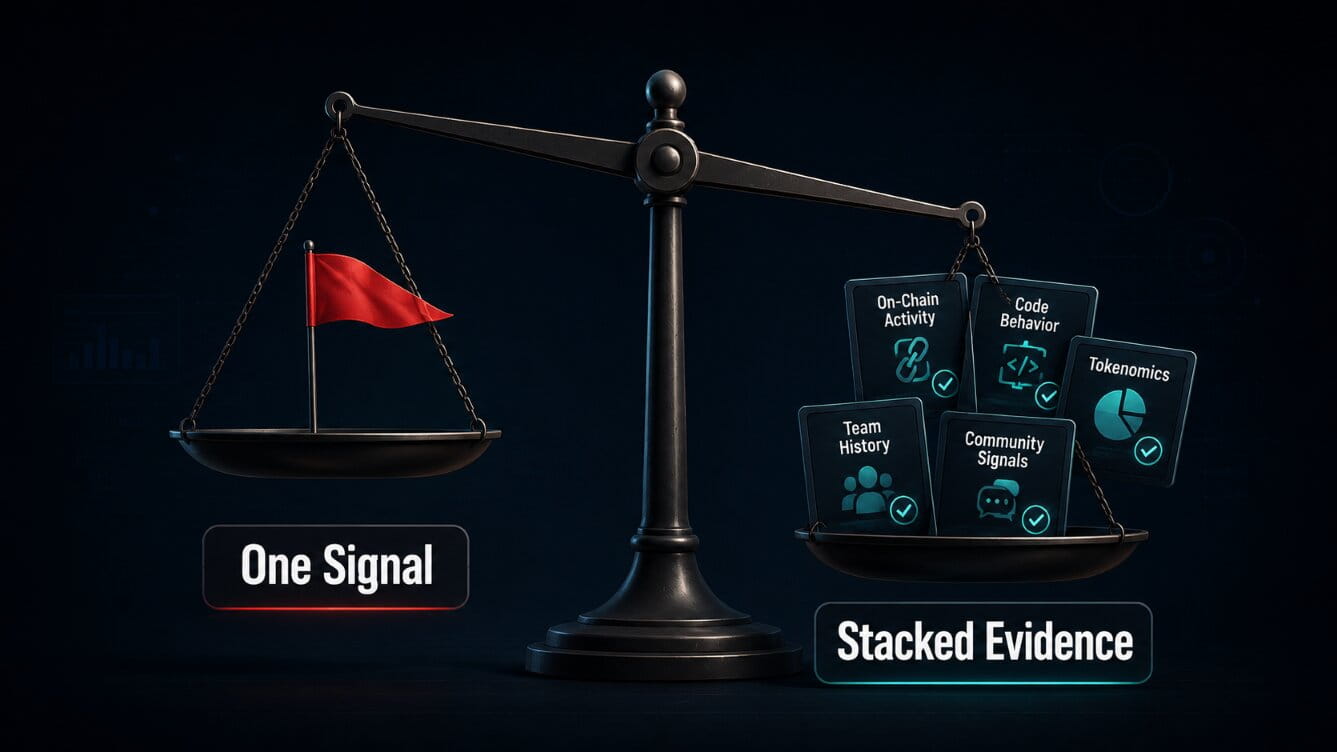
One signal is not proof. A good risk process avoids witch hunts and stacks independent evidence.
- Anonymous team: Pseudonymous founders are not automatically scammers. The relevant question is whether the identity has a verifiable track record, consistent work, and a credible value proposition.
- Low starting liquidity: Fair launches can begin small. Check whether liquidity grows, whether locks are real, and whether insiders retain a path to drain the pool.
- Aggressive roadmap: Some teams ship quickly, while others miss milestones without bad intent. Compare the promise with prior execution, headcount, and delivery history.
- High yield: Real DeFi yield can exist. Determine whether it comes from sustainable revenue, temporary incentives, new deposits, or inflationary token emissions.
The OGAudit view is simple: one warning sign creates caution. Several independent warning signs across team history, tokenomics, admin control, community behavior, and documentation create a stronger risk case that deserves deeper review.
Run All 7 Checks in 30 Minutes
Use this fast screen before depositing into a new project, especially when the homepage relies heavily on an audit badge. For a more complete process, use the full crypto DYOR checklist.
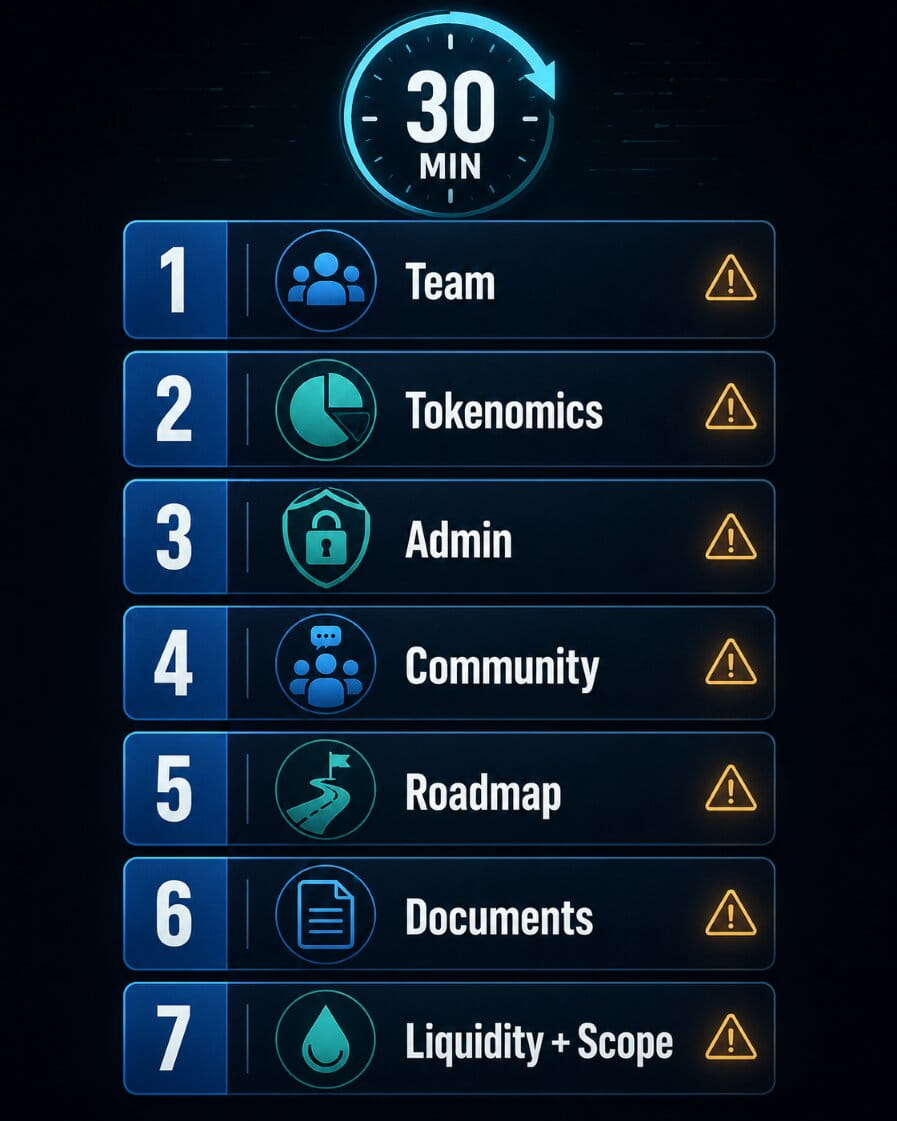
This is not a guarantee. The objective is to remove obvious bad bets before they become expensive lessons.
- Minute 0 to 4 (Team history): Search founder names, aliases, domains, LinkedIn history, GitHub history, and prior projects (DYOR Checks #1 and #2).
- Minute 4 to 8 (Tokenomics and unlocks): Check top holders, team and investor allocations, vesting contracts, the next unlock, and actual liquidity depth (DYOR Checks #8 to #10).
- Minute 8 to 12 (Admin control): Find the admin wallet or multisig. Review signer count, wallet age, transaction history, and independence (DYOR Check #22).
- Minute 12 to 16 (Community authenticity): Read Telegram, Discord, and X replies. Look for specific questions, independent users, and direct answers (DYOR Checks #25 to #27).
- Minute 16 to 20 (Roadmap feasibility): Compare promised products with team size, hiring, commits, shipped milestones, and changed deadlines (DYOR Check #32).
- Minute 20 to 24 (Documentation quality): Open the whitepaper or GitBook, choose one technical section, and explain it in two clear sentences.
- Minute 24 to 30 (Liquidity and audit scope): Verify the liquidity position, then compare the contracts you use with the addresses, repositories, and commits listed in the audit report (DYOR Checks #12, #19, and #21).
Several serious concerns across different categories should pause the decision and trigger deeper research. Passing all seven checks improves the evidence, but it does not eliminate risk.
About the author:
Kripto Raptor is the Chief OG at OGAudit.com and an independent Web3 researcher, blockchain analyst, and entrepreneur. Working full-time in the crypto industry since 2020, he specializes in evaluating Web3 and fintech projects through security analysis, community behavior, and market dynamics. At OGAudit, he publishes data-driven research, crypto social audit reviews, and in-depth project evaluations focused on transparency, risk assessment, and real-world performance. Follow Kripto Raptor on OGAudit, X (Twitter), and LinkedIn.
Frequently Asked Questions About the Topic
Can a crypto project be safe without a smart contract audit?
A project without an audit can still be safer than a reckless audited project, but missing technical review remains a material risk. The strongest protection combines current code review with transparent controls, credible operators, sustainable incentives, and ongoing monitoring.
What is a post-audit rug pull?
A post-audit rug pull occurs when a team markets an audit and later drains value through an unaudited contract, a malicious upgrade, a privileged function, an oracle, tokenomics, or another economic control point. The audit may be real while the route used to remove funds sits outside its scope or deployment state.
Can a smart contract audit detect a rug pull?
Sometimes. An audit can identify dangerous minting, withdrawal, proxy, upgrade, or access-control functions when they are included in scope. It cannot prove team intent, guarantee that recommendations will be implemented, or cover future contracts and unaudited upgrades. An audit is evidence, not a fraud guarantee.
Can an audited token still rug pull after launch?
Yes. A team can deploy new contracts, upgrade proxy logic, abuse admin keys, manipulate tokenomics or oracles, withdraw liquidity through an uncovered position, or use contracts that were never included in the audit.
What should I check first in a smart contract audit report?
Start with the Scope section. Confirm the audited repositories, commit hash, contract addresses, deployment date, unresolved findings, privileged roles, and remediation status. Then compare those addresses with the contract shown in your wallet, block explorer, or dApp transaction path.
Does having multiple audits mean a project is safe?
No. Multiple audits mean that more reviews were completed, but they may still examine the same code, assumptions, or deployment state. Forta’s Euler Finance retrospective noted that the protocol had six audits and a bug bounty program before its March 2023 exploit. Multiple reviews reduce some risks, but they do not remove the need for monitoring and broader due diligence.
Should I trust the “audited by” badge on a project website?
Trust the report more than the badge. The report contains the scope, date, assumptions, findings, remediation status, and unresolved issues. If the contracts you use are not listed, the badge may cover a different product or an earlier deployment.
What does OGAudit examine that code auditors do not?
OGAudit focuses on the human, economic, and operational layer: team history, deployer-wallet behavior, community authenticity, tokenomics pressure, admin control, liquidity, roadmap delivery, and wallet-verified reviewer evidence. See the OG Score coin trust rating methodology for how these signals are evaluated.


