
Trending Coins and Tokens🔥


Crypto
Exchange


TL;DR: Most crypto exchange reviews are not neutral audits. Many are commercial SEO pages built around affiliate commissions, signup bonuses, and tracked links. Public affiliate pages show several major exchanges offering commission structures of up to 70%. That does not prove every ranking is bought, but it means readers should verify disclosure, methodology, risk coverage, and source quality before trusting any recommendation.
Who this is for: readers checking a crypto exchange before depositing funds, moving large size, using leverage, or following a “best exchange” recommendation from Google, YouTube, X, Telegram, or a comparison site.
Scope note: This article is about crypto exchange review articles and editorial recommendation pages and gives an idea about overall crypto reviews including web3 project reviews. It does not analyze market data ranking tables, exchange market lists, or price tracker pages which may also include affiliate links. This is not investment advice, financial advice, or legal advice. It is a practical verification framework for reading crypto exchange reviews with more skepticism.
Why Crypto Review Pages Become Commercial Products
Every “best crypto exchange” article is a content product, and content products need a business model. In crypto SEO, that business model is often affiliate revenue.
The structure is simple. A review site ranks exchanges, sends users through tracked links, and earns money when those users sign up, deposit, or trade. Publishers may receive a fixed payment for a qualified signup, a share of the trading fees generated by referred users, or a hybrid deal that combines both. High volume partners can also unlock better rates or campaign bonuses.
Affiliate revenue is not automatically bad. A clearly disclosed partnership can fund useful research. The problem begins when the money changes the ranking, hides user risks, removes valid criticism, or makes a sales funnel look like independent editorial analysis.

Public Affiliate Payouts Show the Incentive
The table below uses official or primary affiliate pages checked on June, 2026. These programs change often. Rates may also vary by region, product, affiliate status, or performance tier. Readers should verify current terms directly before relying on any rate.
|
Exchange |
Public affiliate payout claim |
|
MEXC |
Up to 70% referral and sub affiliate commissions for approved affiliates. Permanent commission rights are also described. Source: MEXC Affiliate Program. |
|
KuCoin |
Up to 60% commission on invited users' spot and futures trading fees. Permanent affiliate relationships are also described. Source: KuCoin Affiliate Program. |
|
Binance |
Up to 50% commission through a performance-based referral and affiliate structure. Source: Binance Referral Pro update. |
|
Bybit |
Up to 50% commission for approved affiliates. Lifetime commissions and extra sub affiliate benefits are also described. Sources: Bybit Affiliates and Bybit Affiliate FAQ. |
|
OKX |
Up to 50% commission in USDT. OKX states that terms may vary by country or region. Sources: OKX Affiliates and OKX Affiliate Program Rules. |
|
BingX |
Up to 50% commission on trading fees. Daily settlement is also described. Source: BingX Global Partner Program. |
|
Coinbase |
50% of referred users' trading fees for the first three months. Source: Coinbase Affiliates. |
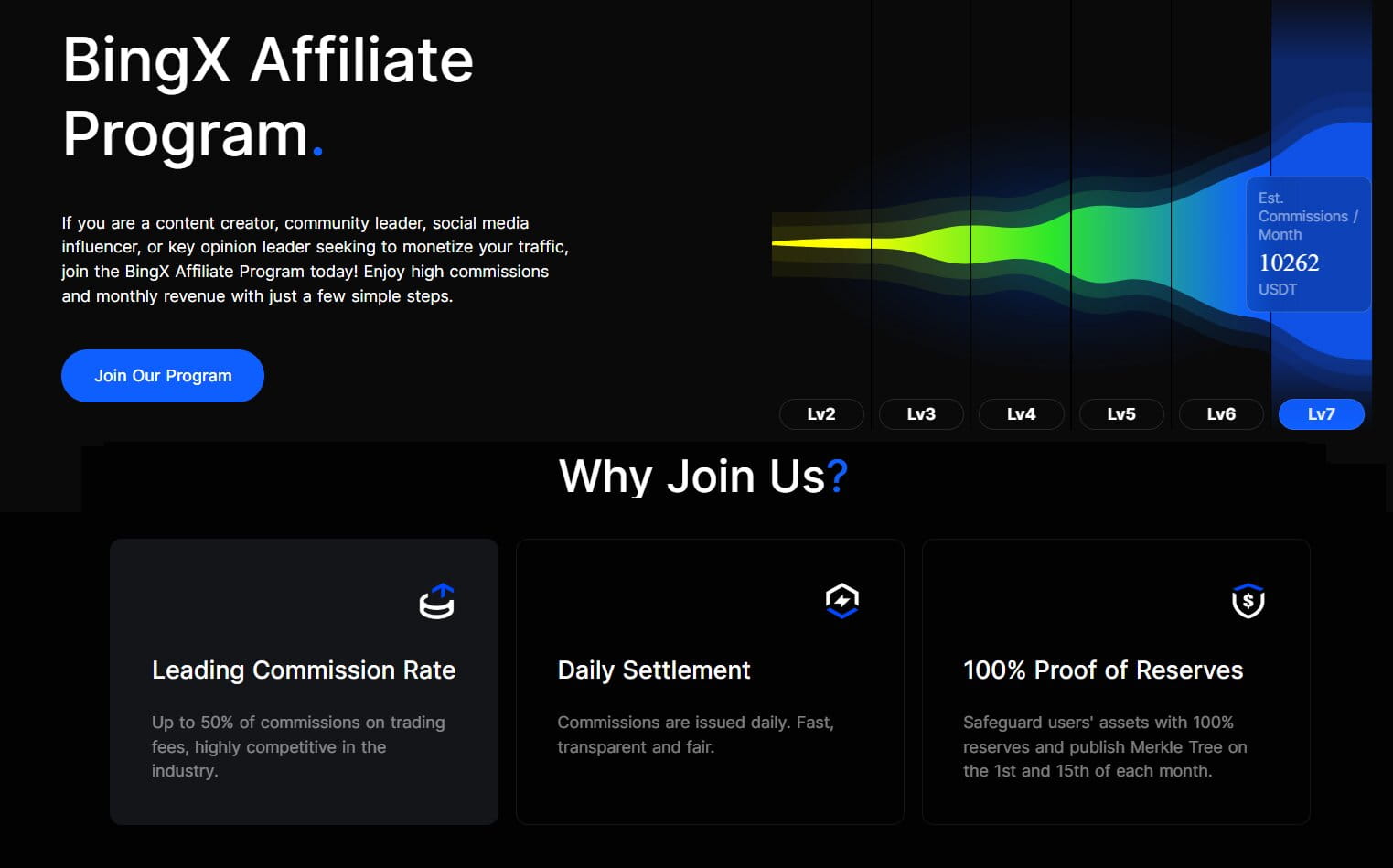
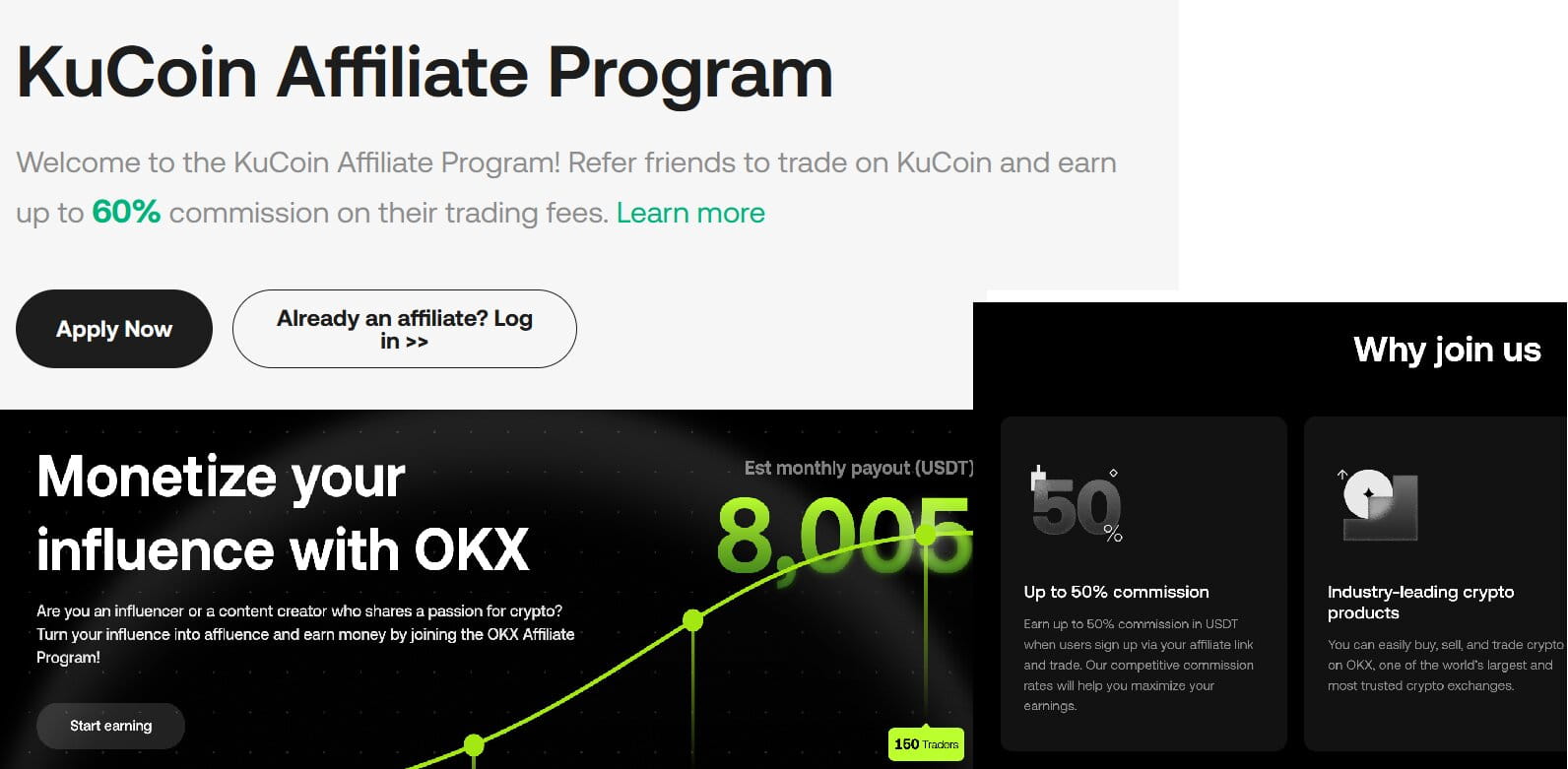
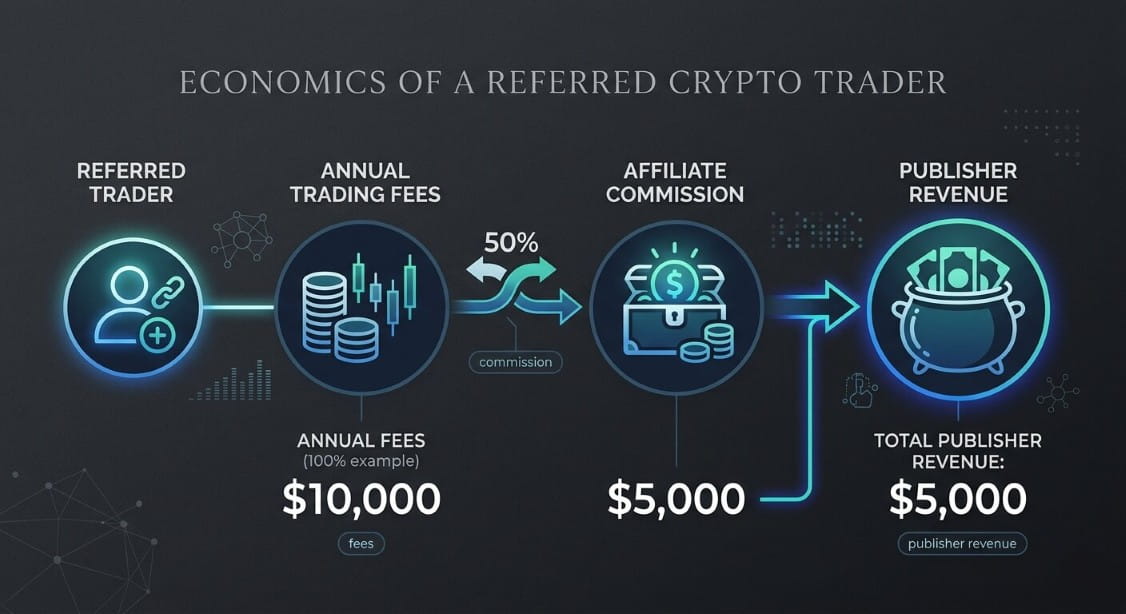
Now do the simple math. If a referred trader generates $1,000 in annual trading fees and the affiliate receives 50%, that user can be worth $500 a year to the publisher. If a review page sends hundreds or thousands of active traders, the commercial value of one top placement can become material.
The Conflict Is Hidden Influence, Not the Link
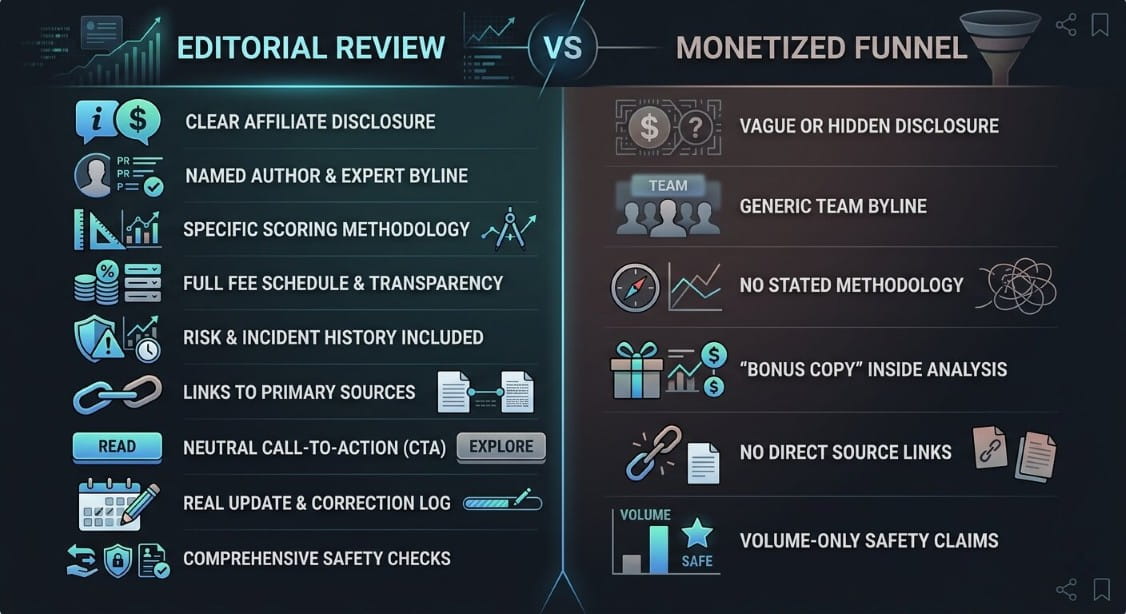
A review page can use affiliate links and still be useful if it follows four strict rules:
- It discloses the affiliate relationship clearly.
- It explains the exact ranking methodology.
- It lists real disadvantages, user complaints, and incident history.
- It never lets payout size override risk analysis.
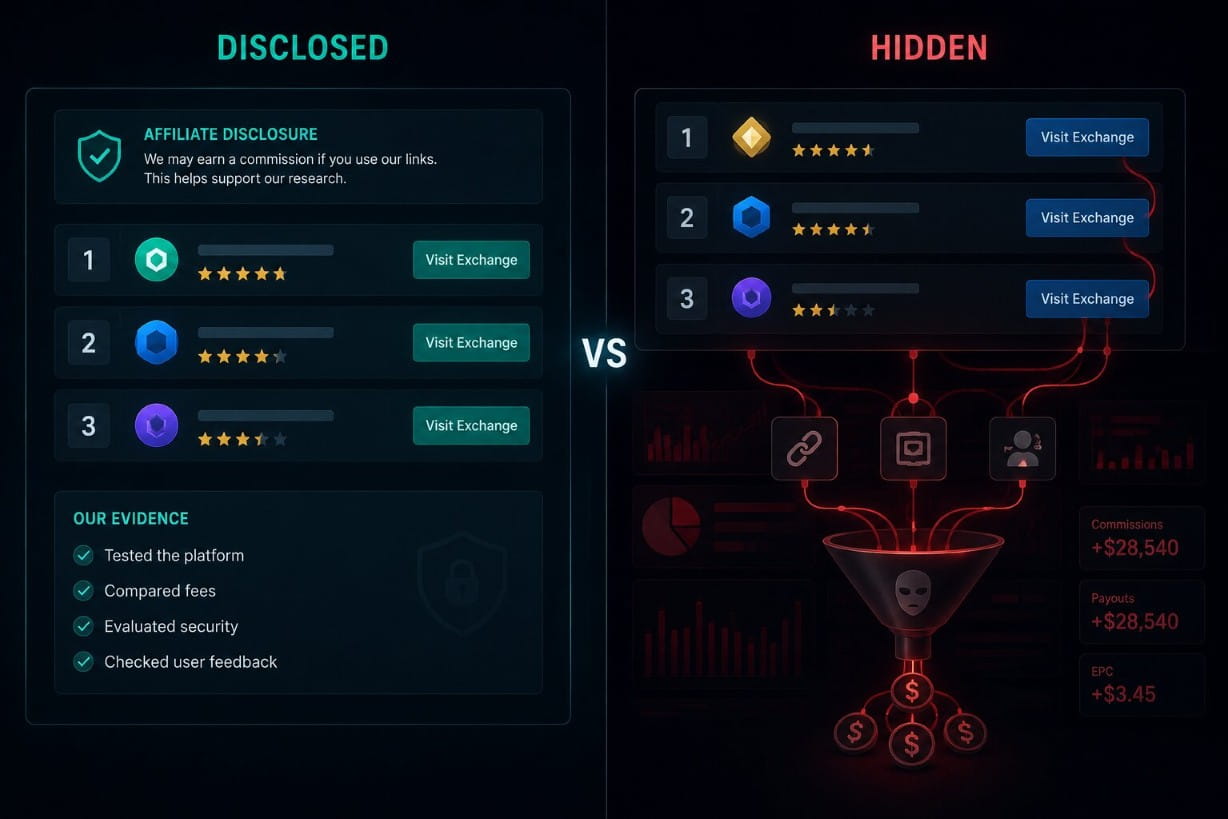
A review becomes misleading when the commercial layer is hidden. The clearest warning signs are undisclosed tracking links, generic praise, weak cons sections, outdated safety claims, and rankings that look like a partner list rather than a serious comparison. Any review that excludes real user complaints and avoids evaluating an exchange's response to critical incidents is unlikely to be neutral. When important negative evidence is omitted, it is reasonable to question whether the review is biased.
The FTC (US Federal Trade Commission)’s endorsement guidance is clear on this point. Unexpected material connections between advertisers and endorsers should be disclosed clearly enough for consumers to understand the relationship. In plain English: if a review earns money when you click or sign up, the reader should know. Sources: FTC Endorsement Guides FAQ and 16 CFR Part 255.
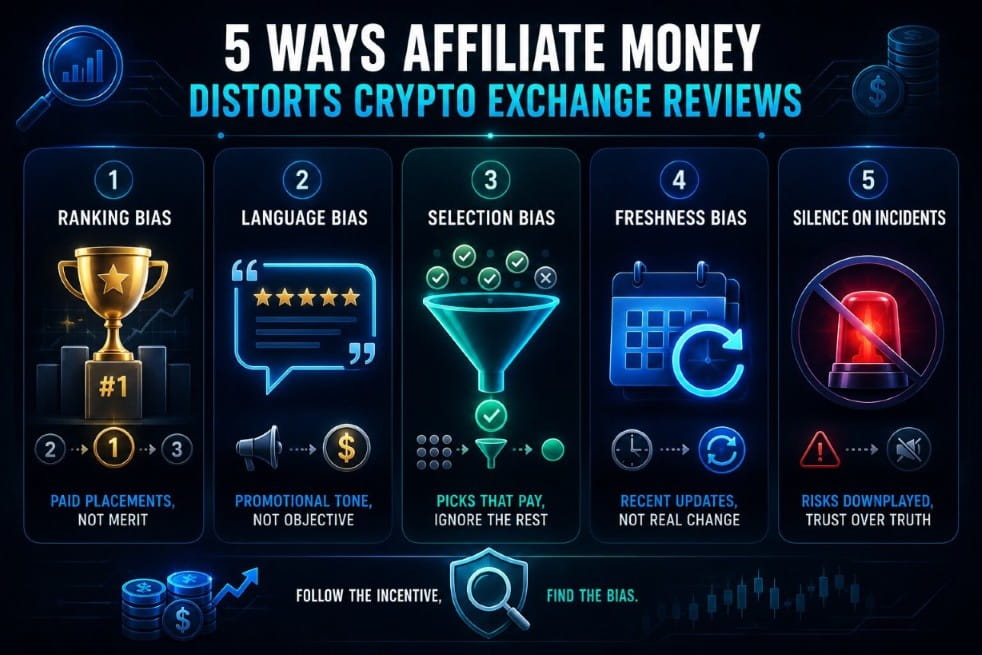
Five Ways Affiliate Money Can Distort Exchange Reviews
1. Ranking bias
If a page ranks multiple exchanges, the exchange in the number one position may indeed be the best product. However, it is often the one that pays the publishing platform the most. Readers cannot know unless the page clearly explains its methodology and discloses any commercial relationships.
A serious review should explain why an exchange ranks first using evidence such as fees, withdrawal reliability, security history, liquidity quality, regulatory context, support quality, and user behavior during periods of market stress.
2. Language bias
Paid review pages often sound similar. They rely on phrases like “trusted by millions,” “industry leading,” “user friendly,” and “innovative.” Those phrases are not proof. A serious review uses verifiable statements such as official fee schedules, dated proof of reserves links, withdrawal tests, incident history, community feedback and source links.
3. Selection bias
Some “top exchange” articles only compare platforms that have affiliate programs or active commercial relationships. That creates a hidden filter before the review even begins. Readers may believe they are seeing the best exchanges on the market up top, when in reality they may be seeing the exchanges with the most valuable commercial deals.
4. Freshness bias
A recent update date does not always mean the review was meaningfully checked. Some pages refresh the month or year in the title without updating incident history and exchange response, fee changes, withdrawal conditions, proof of reserves (with liabilities approved by a 3rd party) links, or regulatory developments. Real freshness means new verification, not just a new date.
5. Silence on major incidents
This is the strongest warning sign. If a review covers a major exchange but never mentions outages, enforcement actions, withdrawal delays, compliance failures, security incidents, or public investigations, it is not giving users a full risk picture.
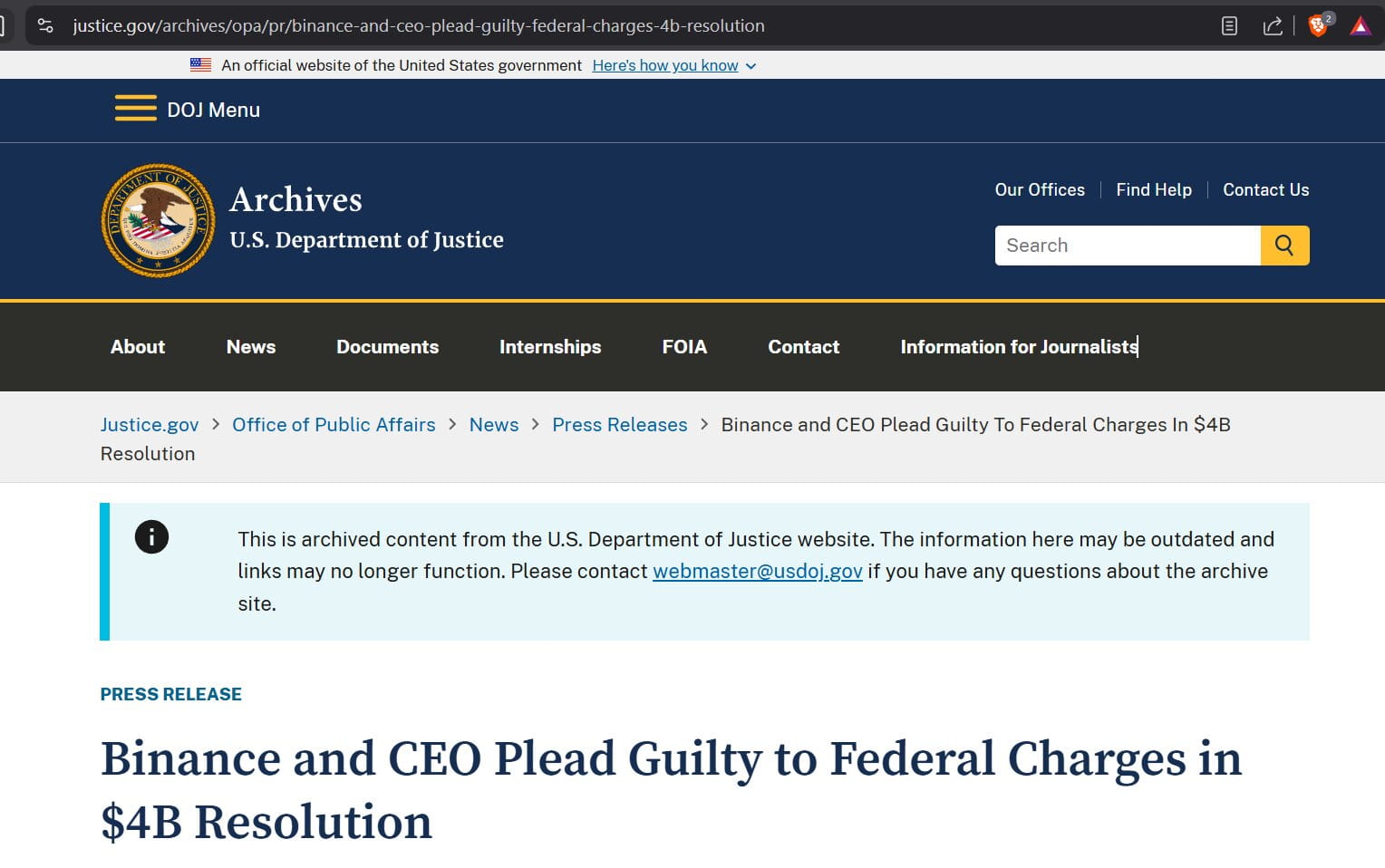
Public enforcement and investigation context exists around several major exchanges. Binance entered a US Department of Justice resolution in 2023 and agreed to pay an astonishing $4.3 billion. Founder and then CEO Changpeng Zhao also pleaded guilty to failing to maintain an effective AML program. OKX pleaded guilty in February 2025 to operating an unlicensed money transmitting business and agreed to pay more than $504 million. ICIJ later reported that hundreds of millions of dollars in Tether from Huione Group ended up in customer accounts at Binance and OKX while both exchanges were under compliance scrutiny. A fair review does not need to overstate these facts, but it should not ignore them. Sources: DOJ Binance resolution, DOJ OKX guilty plea, ICIJ Coin Laundry investigation, and FinCEN Huione final rule.
The KOL Problem: Paid Influencer Recommendations
The second layer of hidden influence lives on X, YouTube, TikTok, Telegram, Discord, and private groups. A creator can be paid directly for a post, thread, video, exchange tutorial, or so called “review.” They can also earn through referral codes, trading fee shares, custom campaign links, or private partner deals.
The payment itself is not the main problem. The real risk is the hidden incentive. A creator can publish a useful sponsored explanation if the sponsorship is clear and the risks are still stated. The problem starts when a “review” looks independent while the economics reward only new signups and higher trading volume.

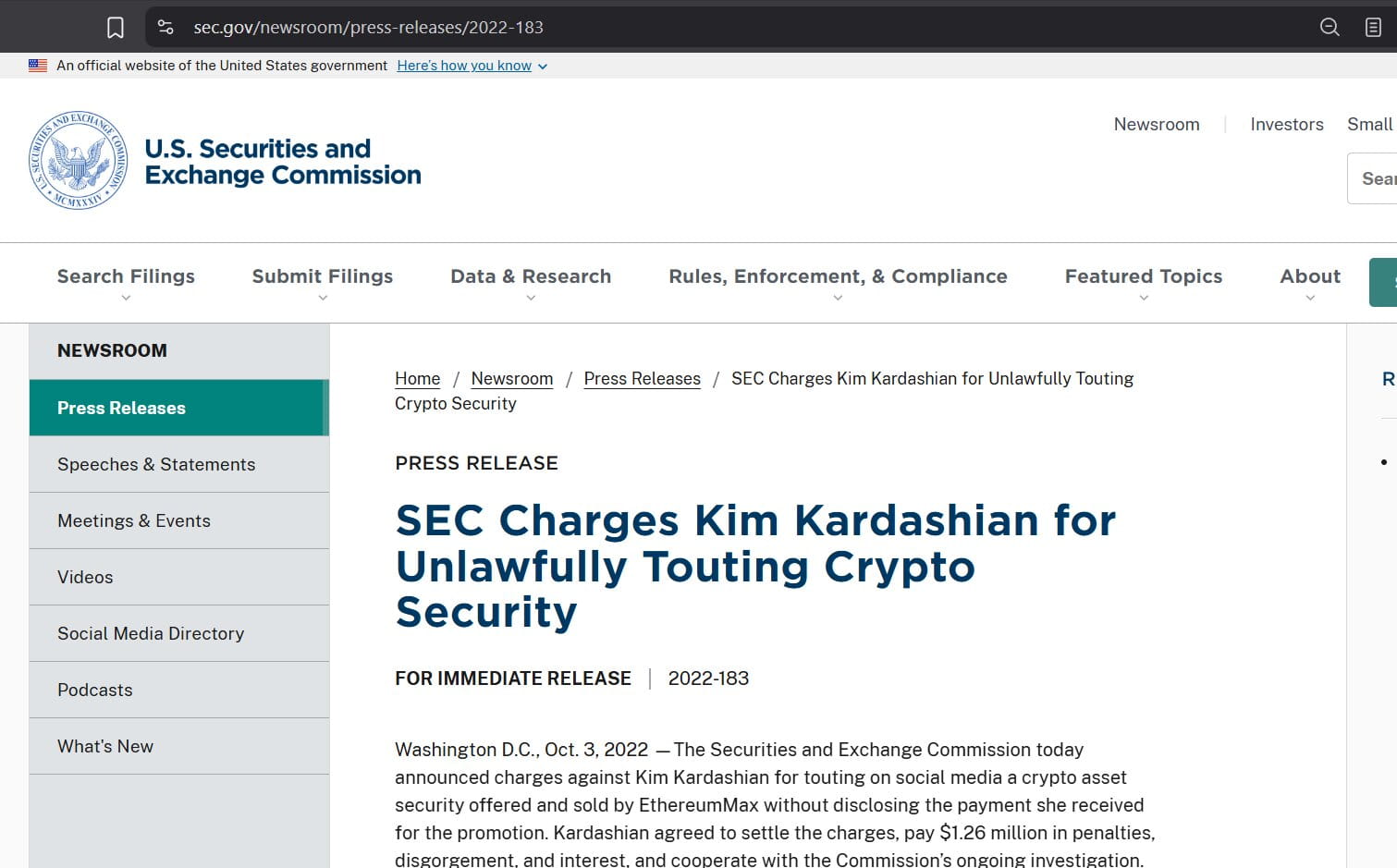
Regulators have repeatedly warned that paid crypto promotion can mislead readers when compensation is not clearly disclosed. The SEC Kim Kardashian case is a useful example outside exchange reviews. Kardashian agreed to pay $1.26 million after promoting EthereumMax without properly disclosing that she had been paid $250,000 for the post. The SEC Paul Pierce case is another strong warning. The SEC said Pierce failed to disclose more than $244,000 in EMAX compensation and made misleading promotional statements, leading to a settlement of $1.409 million.
Older crypto promotion cases show the same pattern. In 2018, the SEC charged Floyd Mayweather Jr. and DJ Khaled for failing to disclose payments they received for promoting ICOs. These were not exchange review cases, but they show the same core issue: paid promotion can look unbiased when the payment is hidden.
Exchange advertising has also faced scrutiny. In January 2026, the UK Advertising Standards Authority ruled that Coinbase ads irresponsibly trivialised crypto risk by implying crypto could be an answer to cost of living pressures. That case was not about undisclosed affiliate payments, but it is directly relevant to exchange marketing. It shows why promotional crypto messaging needs clear risk context.
Extreme misuse also appears in scam campaigns. Unit 42 documented fraudulent crypto investment platforms distributed through websites and mobile apps, with fake platform infrastructure used to deceive victims. This does not mean ordinary exchange review pages are scams. It does show why hidden promotion deserves serious scrutiny.
Red Flags In Any Crypto Exchange Review
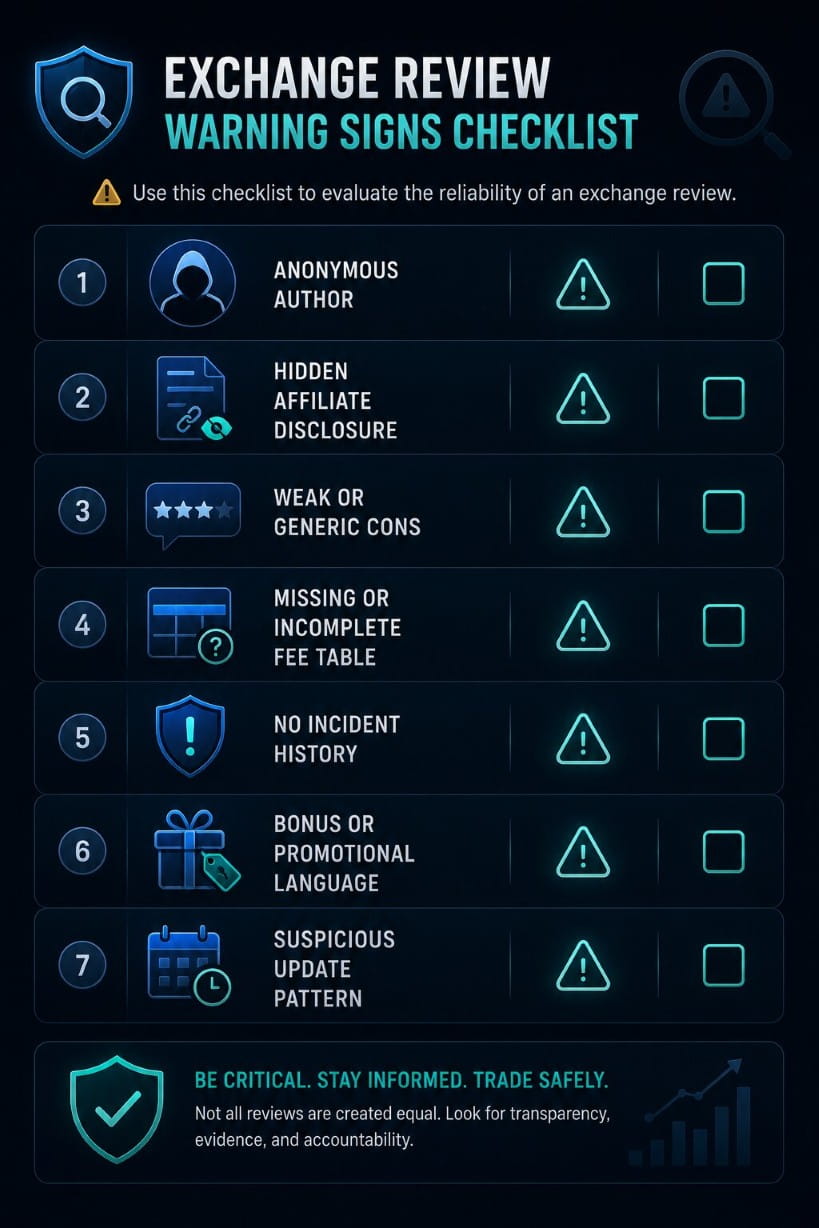
Run this scan before reading the full page. If several signals appear together, treat the review as commercial content until proven otherwise.
No named author
Anonymous team bylines are weak for crypto exchange reviews. A serious review should show a named author, editor, update date, and visible expertise.
No clear affiliate disclosure
If every “visit site” button uses a tracked link but the page has no clear disclosure, the ranking should not be trusted.
No real cons section
“Could offer more educational content” is not a real downside. A real cons section mentions fees, withdrawal friction, incident history, regional restrictions, support issues, or other risks.
No fee table
A review that says “low fees” but does not show maker fees, taker fees, withdrawal fees, spread behavior, deposit and custodian fees or product specific costs is incomplete.
No incident history
Most major exchanges have documented operational, regulatory, security, or customer support history. A review that ignores every negative event is filtering reality.
Bonus language inside analysis
“Claim your bonus now” is conversion copy. It should not sit inside a paragraph pretending to be risk analysis.
FYI: Those exaggerated bonuses are usually not actual cash. In most cases, they are non-withdrawable futures coupons, trading credits, rebate vouchers, or temporary fee discounts rather than money you can withdraw directly.
Suspicious update pattern
A review updated monthly without visible methodology changes, source updates, fee checks, or incident additions may be refreshing for SEO, not accuracy.
How to Check If an Exchange Review Is Truly Independent
You do not need a full research desk. You need the review page, a browser, and one or two source checks.
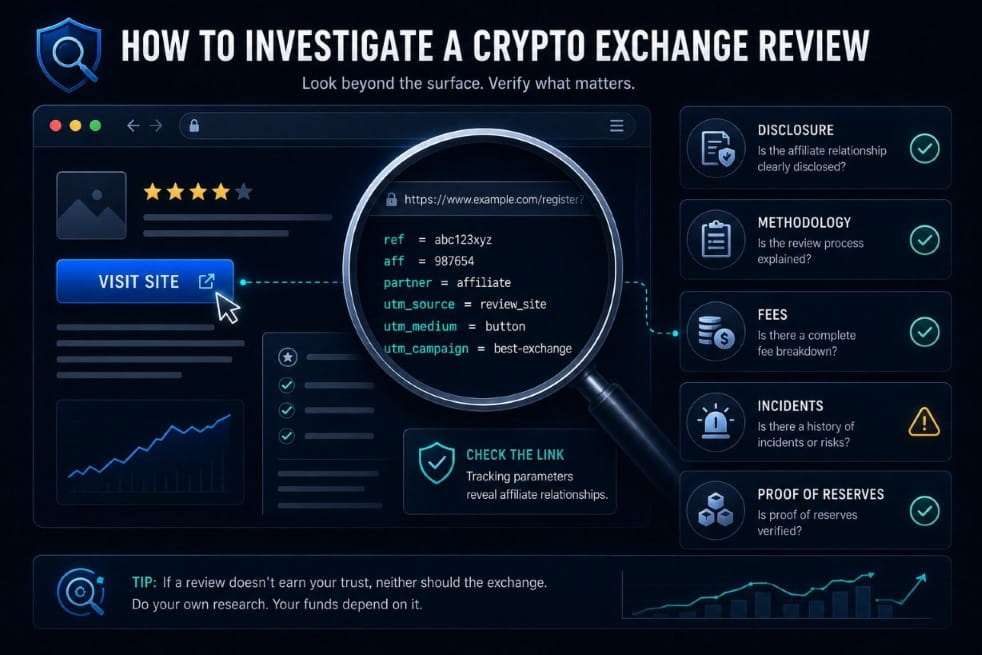
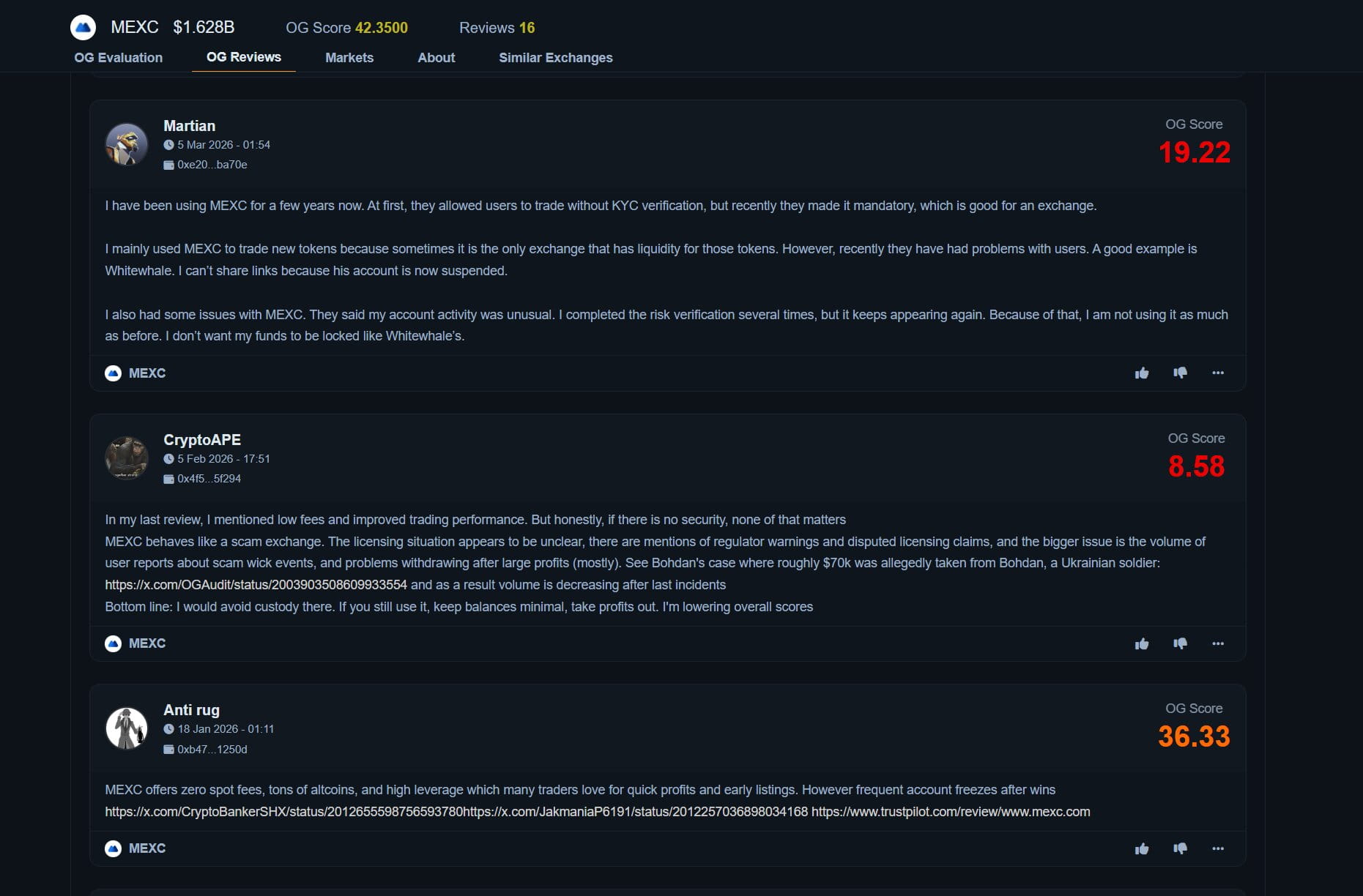
Start by asking whether the review shows its author, methodology, affiliate disclosure, fee data, incident history, and update logic. Then compare it with real user experience signals. On OGAudit, Crypto OGs review exchanges through wallet verified profiles and rate both strengths and weaknesses, including withdrawal reliability, support behavior, liquidity quality, fee clarity, safety signals, and review history.
A serious exchange review should not only explain why a platform looks good. It should also show where trust can break. Below are screenshots of real reviews from Crypto OGs that discuss both positive experiences and potential risks. You can also review our exchange rating methodology for additional context.
Why Reported Volume Is Not Enough
Some exchange reviews still lean too heavily on reported trading volume. That is a weak shortcut. High reported volume does not always mean usable liquidity, clean market activity, or a good user experience.
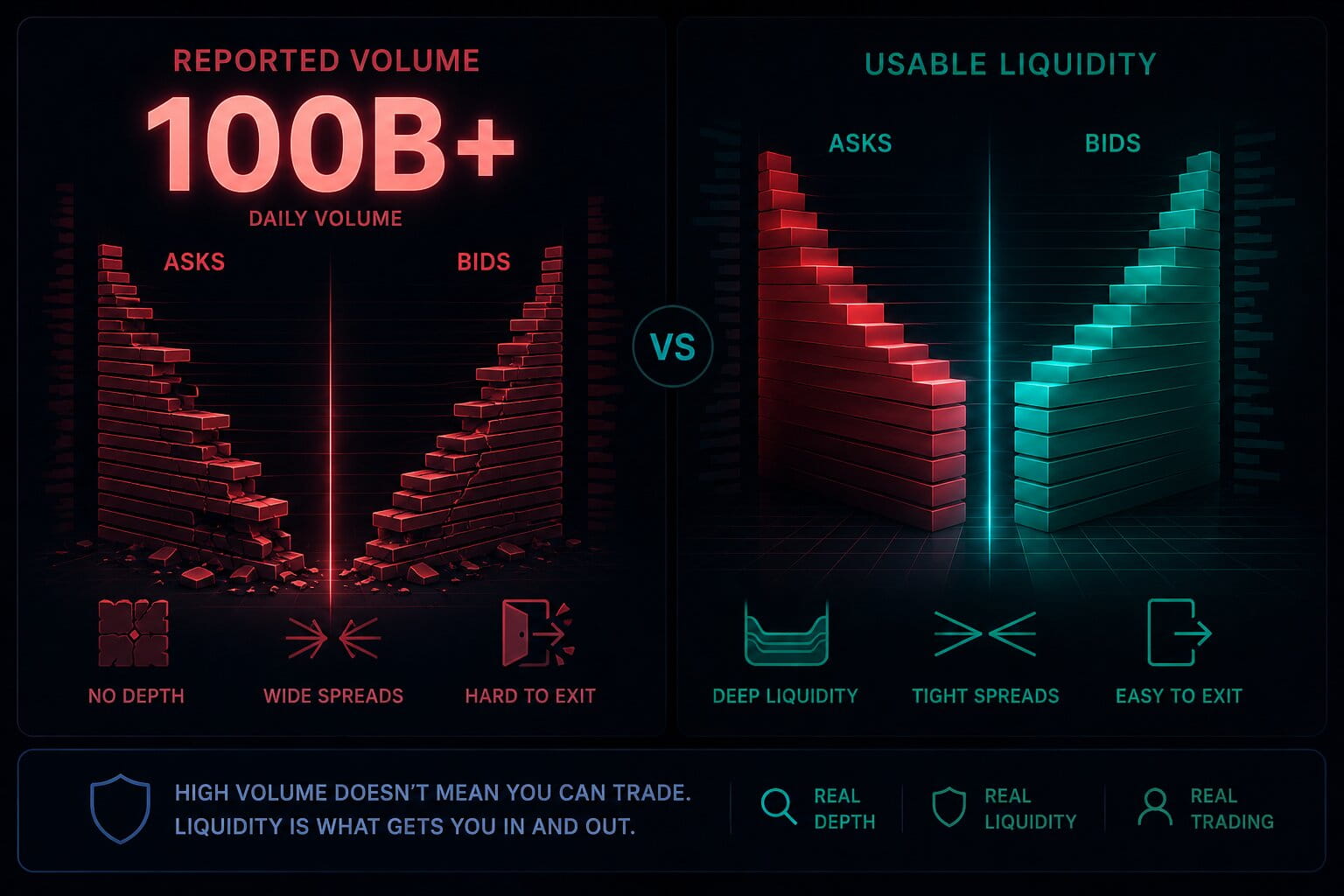
Wash trading can inflate activity and make a market look healthier than it is. Chainalysis (Chainalysis market manipulation report) describes wash trading as repeated buying and selling that can artificially inflate trading volume and create a misleading perception of demand. Coin Metrics (talos.com) also notes that fake trading volume remains a persistent problem on crypto exchanges, which is why reported volume should not be accepted at face value.
A better exchange review asks harder questions. Can users actually enter, exit, withdraw, and get support when the market is under pressure? Does the exchange have real order book depth, reasonable spreads, transparent fees, clear proof of reserves, and a history of handling stress without freezing users out?
Volume may show activity. It does not prove trust.
Proof of Reserves Is Useful, But Not Complete Without Liabilities
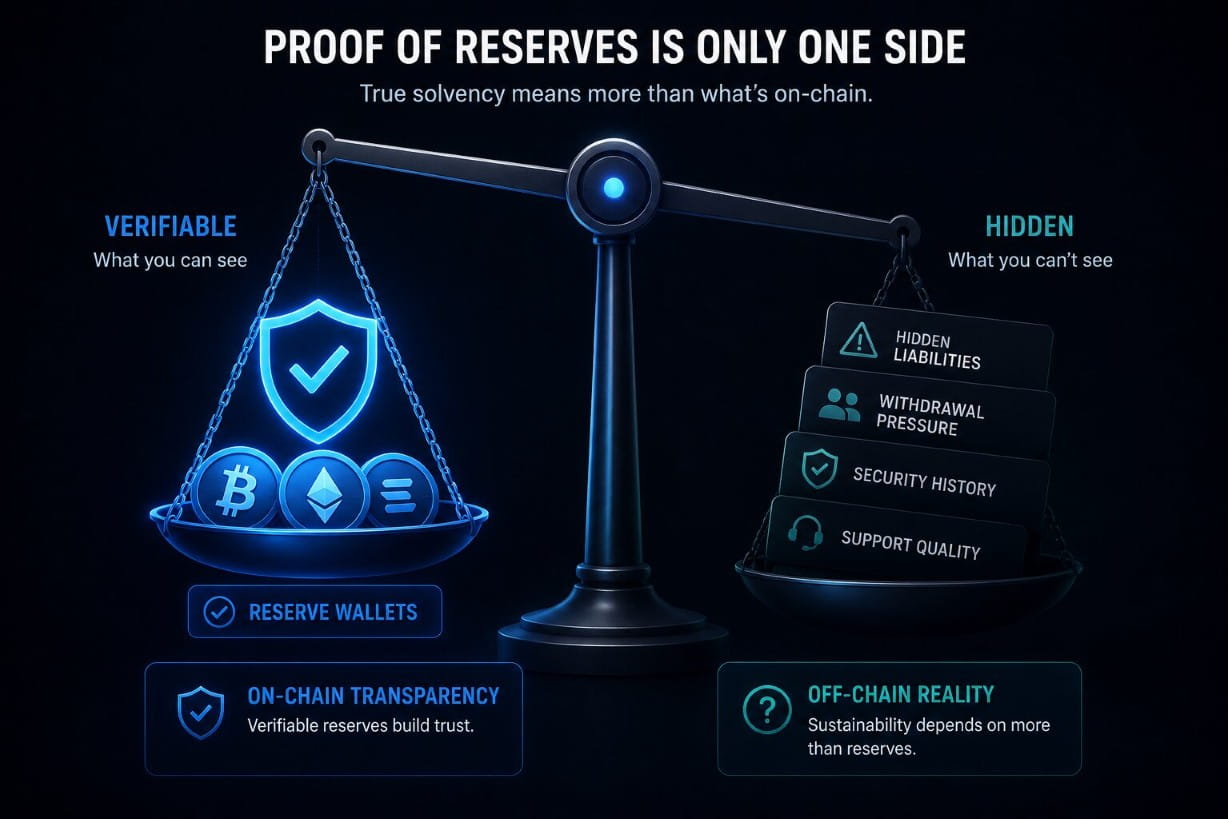
Proof of reserves can help users verify that an exchange holds certain assets at a point in time. It is a useful transparency signal. But proof of reserves is not the same as a full solvency audit. PwC notes that proof of reserves can provide transparency about digital assets held by a custodian or exchange, but it does not by itself show the full risk picture for the organization. Source: PwC on proof of reserves limitations.
So a review should not say “safe because proof of reserves exists.” A more accurate sentence is: proof of reserves is one useful signal, but it should be read alongside liabilities, withdrawal behavior, security history, regulatory context, and support quality.
The OGAudit Approach in Reviewing Crypto Exchanges
OGAudit is built around social audit signals, not paid ranking placement.
Our goal is not to replace every technical audit, exchange dashboard, or market data platform. It is to add a human trust layer that focuses on what users actually experience: withdrawal reliability, support behavior, liquidity quality, fee clarity, safety signals, and community verified review history.

OGAudit’s review system is designed around five trust layers.
1. Transparent authorship
Editorial pages should have named ownership, visible review dates, and accountable correction standards.
2. No paid ranking control
OGAudit does not sell ranking position. Sponsors, if present, should be labeled as ads and separated from audit outcomes.
3. Verifiable reviewer quality
OGAudit uses wallet verified reviewer signals to reduce low quality, disposable, and Sybil style reviews. The 1000 day EVM wallet requirement raises the cost of fake review attacks.
4. Review permanence and context
Reviews should not be silently rewritten after price action, exchange incidents, or project drama. Immutable or change logged reviews protect the historical record. Therefore all reviews on OGAudits social audit section including exchange reviews submitted by Crypto Ogs are permanent and time stamped.
5. Source discipline
Third party factual claims should link to primary or high quality sources. If a claim cannot be sourced, it should be removed, softened, or marked for manual review.
Related OGAudit resources, learn how our community reviews coins and exchanges in an unbiased and a structured way: Crypto Social Audit methodology, real exchange fail cases and a practical safety checklist.
That is the core difference between a conversion funnel and a trust review. A conversion funnel asks which platform pays best. A trust review asks what users can verify, what risks are visible, and what remains unknown.
Practical Checklist: True Editorial/Community Review or Monetized Funnel?
|
Check |
Good sign |
Bad sign |
|
Disclosure |
Clear affiliate or sponsor note near the ranking |
No disclosure or vague footer only |
|
Author |
Named author and editor |
Generic team byline |
|
Methodology |
Specific scoring criteria |
No methodology |
|
Fees |
Official fee schedule linked |
“Low fees” only |
|
Risk history |
Incidents and regulatory context included |
Only positive language |
|
Claims |
Primary sources linked |
No source links |
|
CTA language |
Neutral outbound links |
Bonus copy inside analysis |
|
Update date |
Shows what changed |
Date refreshed without evidence |
|
Exchange safety |
Withdrawal, liquidity, reserves, support covered |
Volume and bonus only |
About the author:
Kripto Raptor is the Chief OG at OGAudit community and an independent Web3 researcher, blockchain analyst, and entrepreneur. Active in crypto since 2016 and full-time in the industry since 2020, he focuses on evaluating Web3 and fintech projects through security analysis, community behavior, market dynamics, and real-world performance. At OGAudit, he publishes data-driven research, crypto social audit reviews, and in-depth project evaluations focused on transparency and risk assessment.
Follow Kripto Raptor on OGAudit, X (Twitter), and LinkedIn.
FAQ
Are all crypto affiliate links bad?
No. Affiliate links are not automatically bad. They can fund research and content. The problem is undisclosed compensation or rankings shaped by payout rather than evidence.
Are most crypto exchange reviews paid?
Many crypto exchange review pages are monetized through affiliate links, referral codes, or trading fee commissions. That does not automatically make them false, but it means readers should verify disclosure, methodology, and source quality before trusting the ranking.
How can I tell if a crypto exchange review is honest and unbiased?
Look for a named author, clear disclosure, real cons, updated sources, fee tables, incident history, and links to primary evidence. If the review only uses praise, bonuses, and vague safety language, treat it as commercial content.
What is the fastest red flag in a crypto exchange review?
The fastest red flag is a tracked “visit site” link with no clear affiliate disclosure. The second fastest is a review that calls an exchange safe but never mentions withdrawals, fees, proof of reserves with liabilities breakdown, enforcement history, or support behavior, real user complaints and team response.
Does proof of reserves prove an exchange is safe?
No. Proof of reserves is useful, but it is not a complete solvency audit. It should be checked together with liabilities, withdrawal behavior, security history, regulatory context, and support quality.
Does OGAudit accept paid rankings?
No. OGAudit does not sell ranking positions or allow sponsors to change audit outcomes. Projects may appear only in clearly labeled, pre designed advertising placements, but ads never affect OG Scores, user reviews, review visibility, or audit results. Check our strict ad policy here.
Can Exchanges pay to change their OG Scores?
No. Exchanges cannot pay to change OG Scores. OG Scores can only be given by wallet verified Crypto OG reviewers. The OGAudit team does not decide, delete, edit, or manually change user scores. Requests to buy, edit, remove, or manipulate scores are rejected, and exchanges or projects making such offers may be flagged.


